Master English grammar with free lessons, printable worksheets, quizzes, and practical examples. Whether you’re a student, teacher, ESL learner, or self-learner, our resources will help you improve your English with confidence.
Browse our grammar lessons below or use the search box to find a specific topic.
Parts of Speech
-
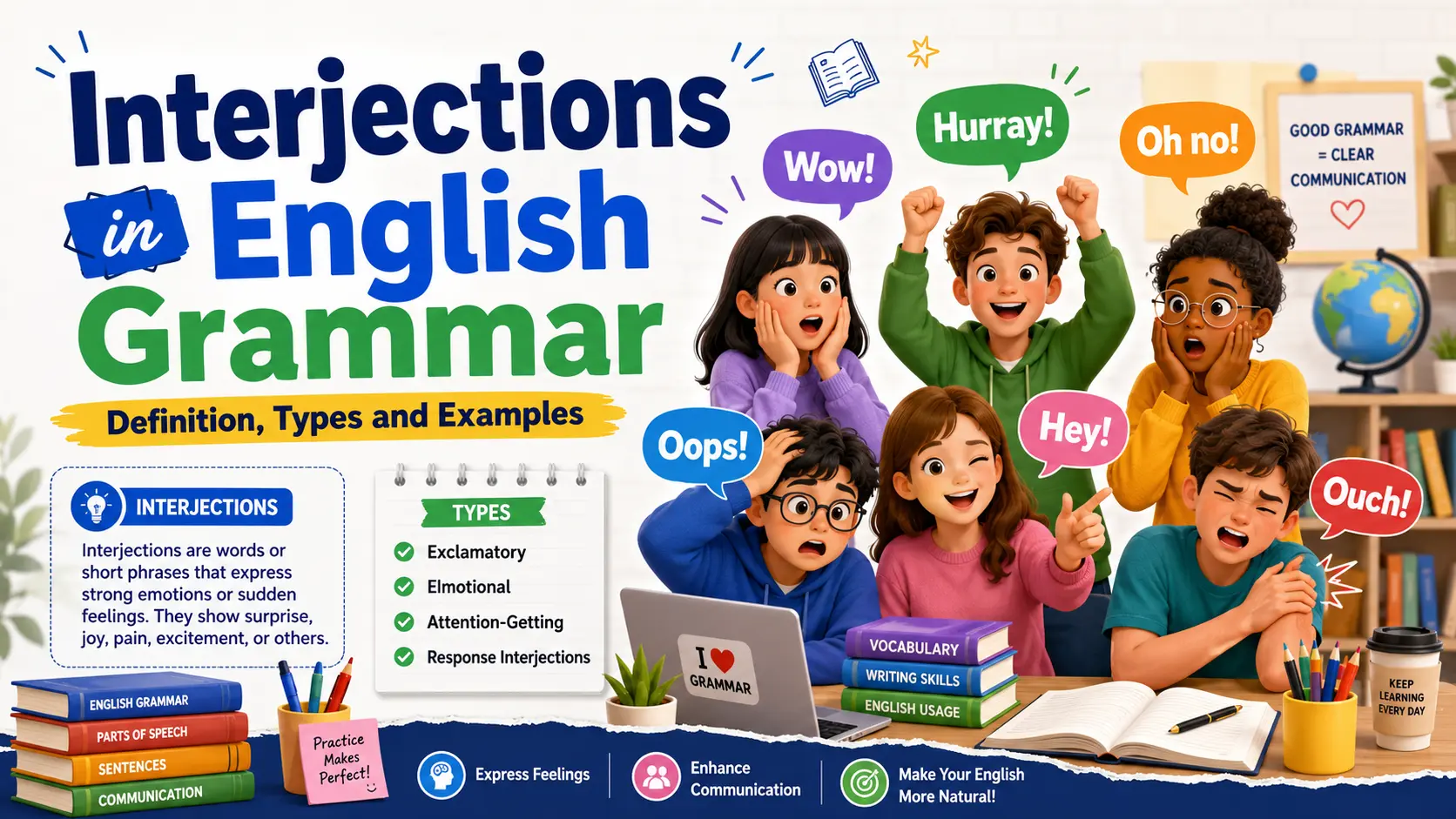
Interjections in English Grammar: Definition, Types and Examples
Introduction Interjections are short words or phrases used to express sudden feelings, emotions, reactions, or strong responses. They are common in both spoken and written English and help make communication more natural and expressive. Words like “wow,” “oh,” “ouch,” and “hey” are examples of interjections. Although they are usually small words, they play an important…
-
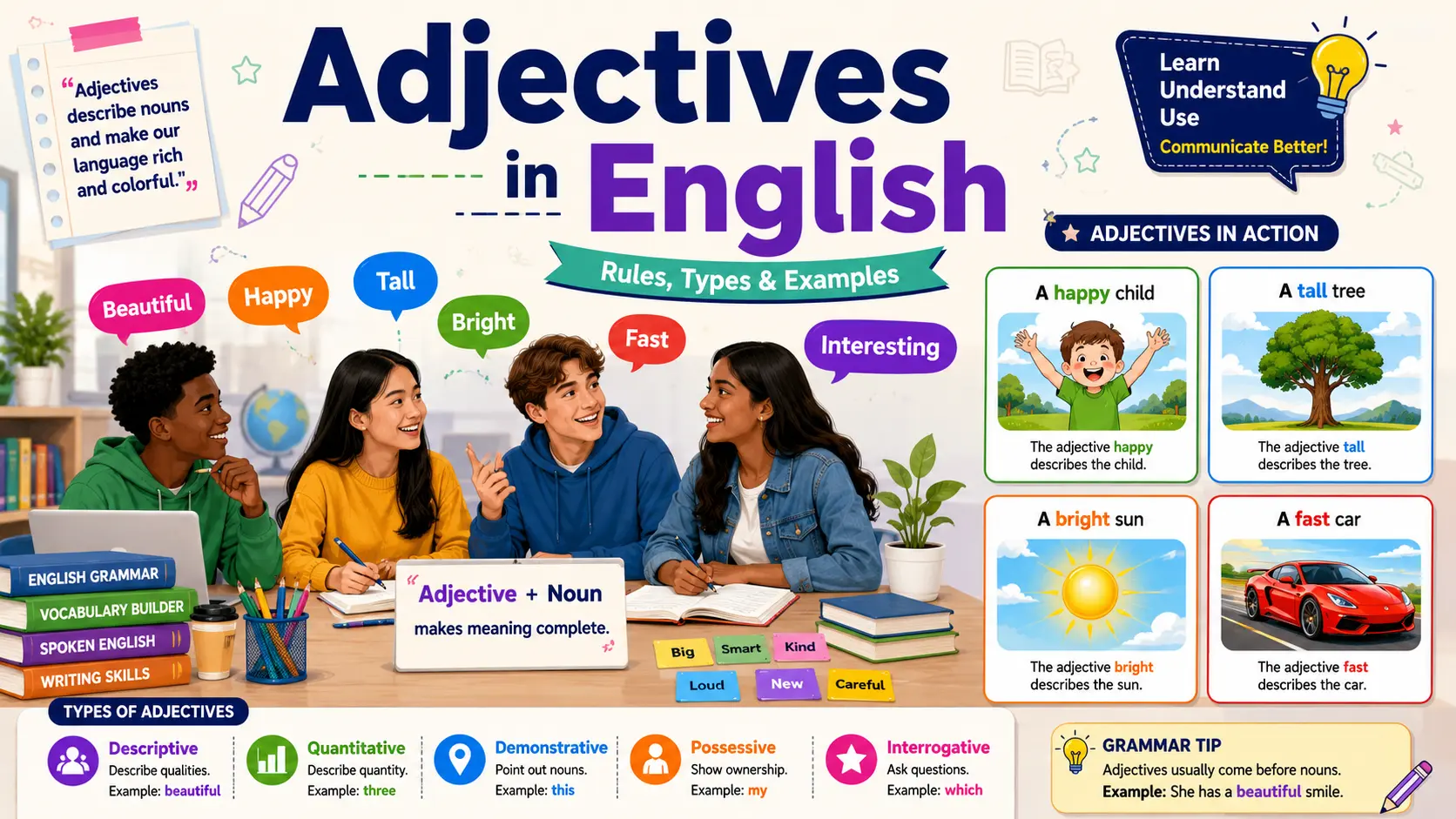
Adjectives in English: Rules, Types & Examples
Adjectives in English: Rules, Types & Examples Imagine trying to describe your favorite meal, a memorable vacation, or even a rainy afternoon without using words like delicious, unforgettable, or gloomy. It is almost impossible! Without these words, our language becomes flat, plain, and entirely black-and-white. Adjectives are the colorful paintbrushes of the English language. They…
-
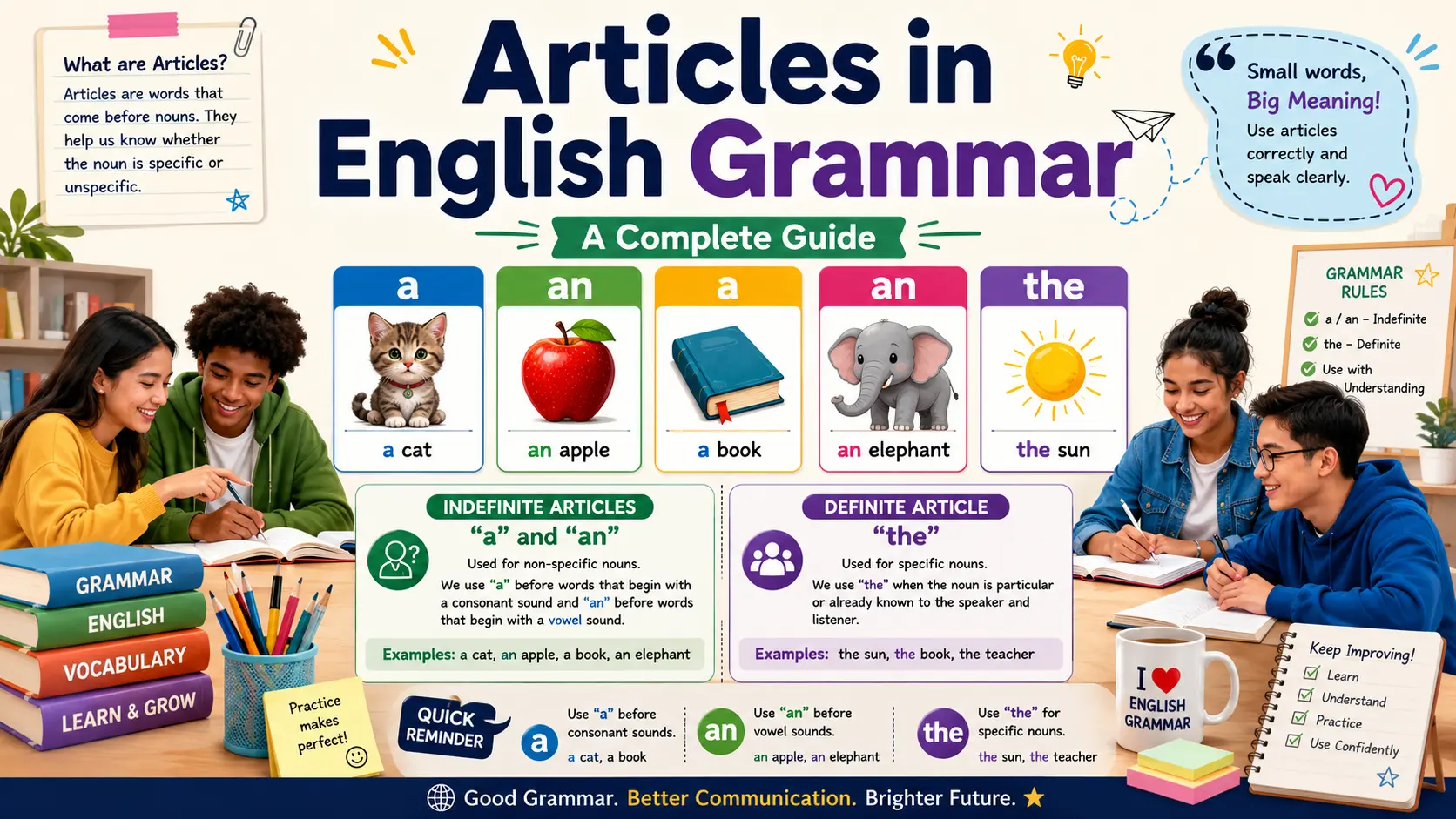
Articles in English Grammar: A Complete Guide
Articles in English Grammar: A Complete Guide Many English learners overlook articles because they seem like tiny, insignificant filler words. However, think of articles as the directional signs of a sentence. They tell your listener exactly where to look: are we talking about any old “apple” in the bowl, or are we talking about “the…
-
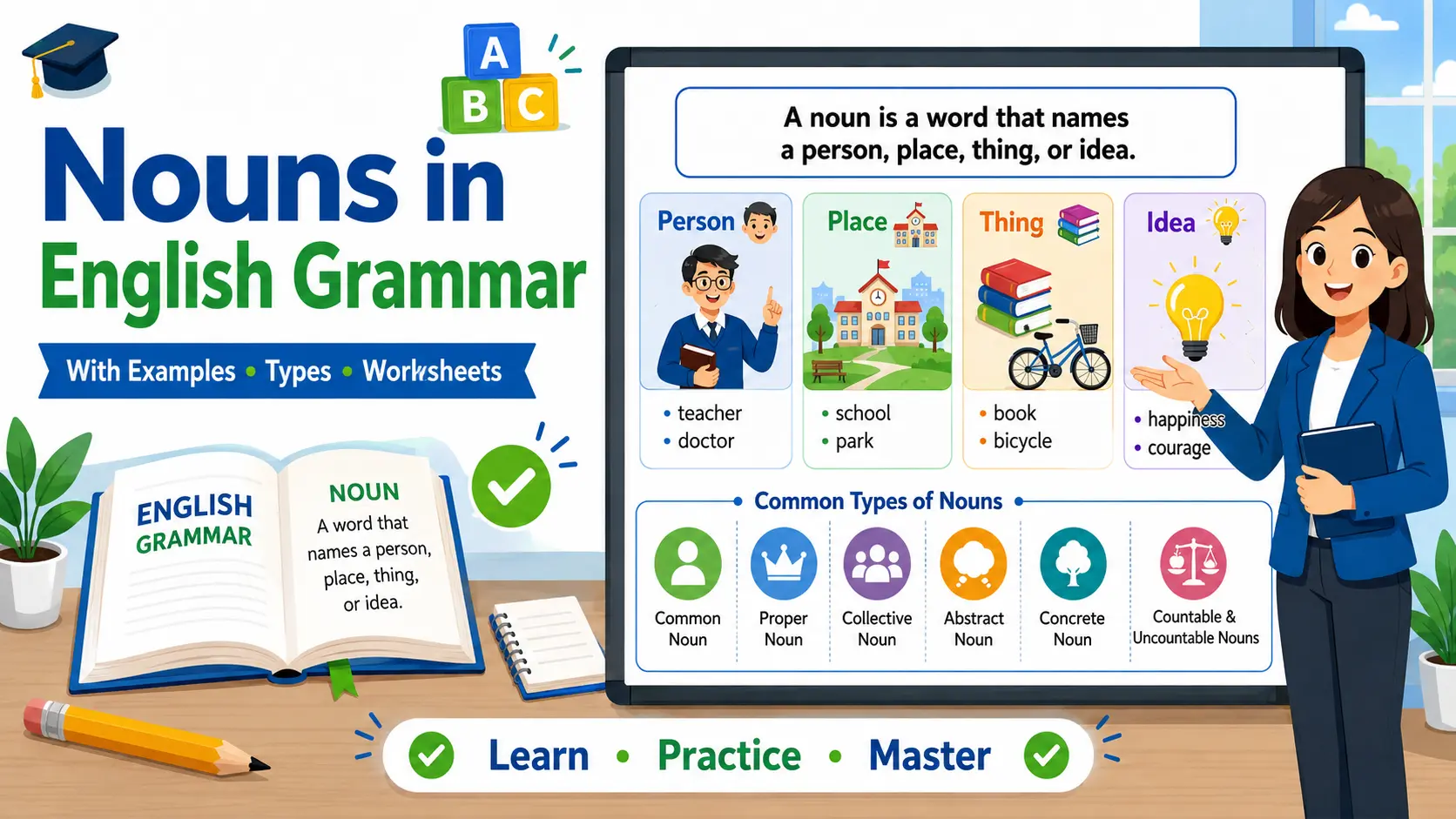
Nouns in English Grammar(With Examples, Types & Worksheets)
Nouns in English Grammar Think of nouns as the anchor points of the English language. Without them, we wouldn’t be able to talk about who we are, where we are going, or what we are thinking. Whether you are texting a friend, writing an essay, or ordering food, you are using nouns constantly. They are,…
-
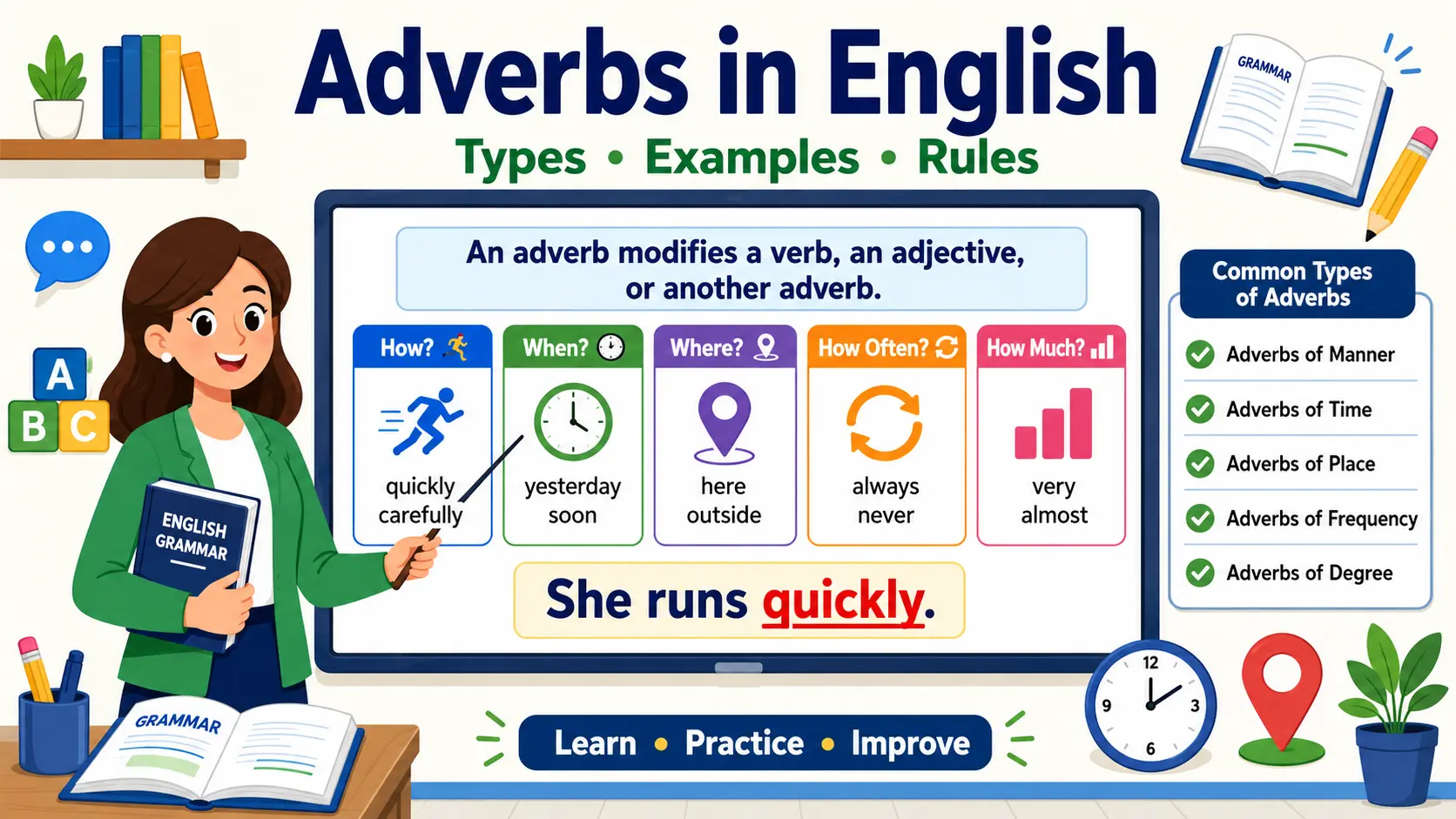
Adverbs in English (Types, Examples & Rules)
Adverbs in English Grammar Adverbs in English are words that describe verbs, adjectives, or other adverbs. They help explain how, when, where, or how often something happens. In this guide, you will learn the types of adverbs, clear examples, and simple rules to improve your grammar. If you want to improve your English, learning adverbs…
-
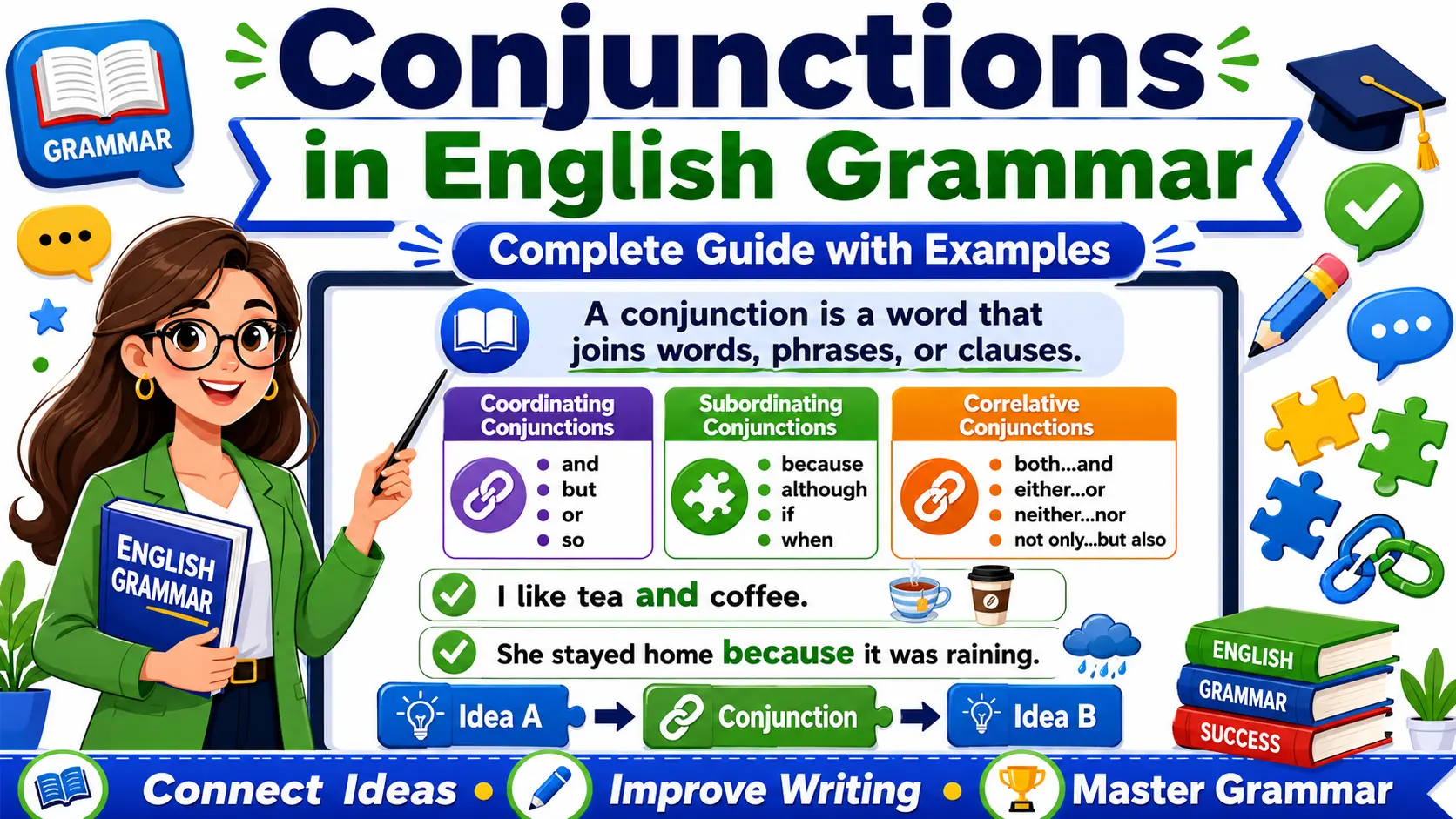
Conjunctions in English Grammar (Complete Guide with Examples)
Conjunctions in English Grammar Think of conjunctions as the unsung heroes of smooth communication. Without them, our speech and writing would feel incredibly choppy—like a robot reading a dry list of facts. In this guide, we are going to break down exactly how these little words act as bridges between your thoughts, making your English…
-
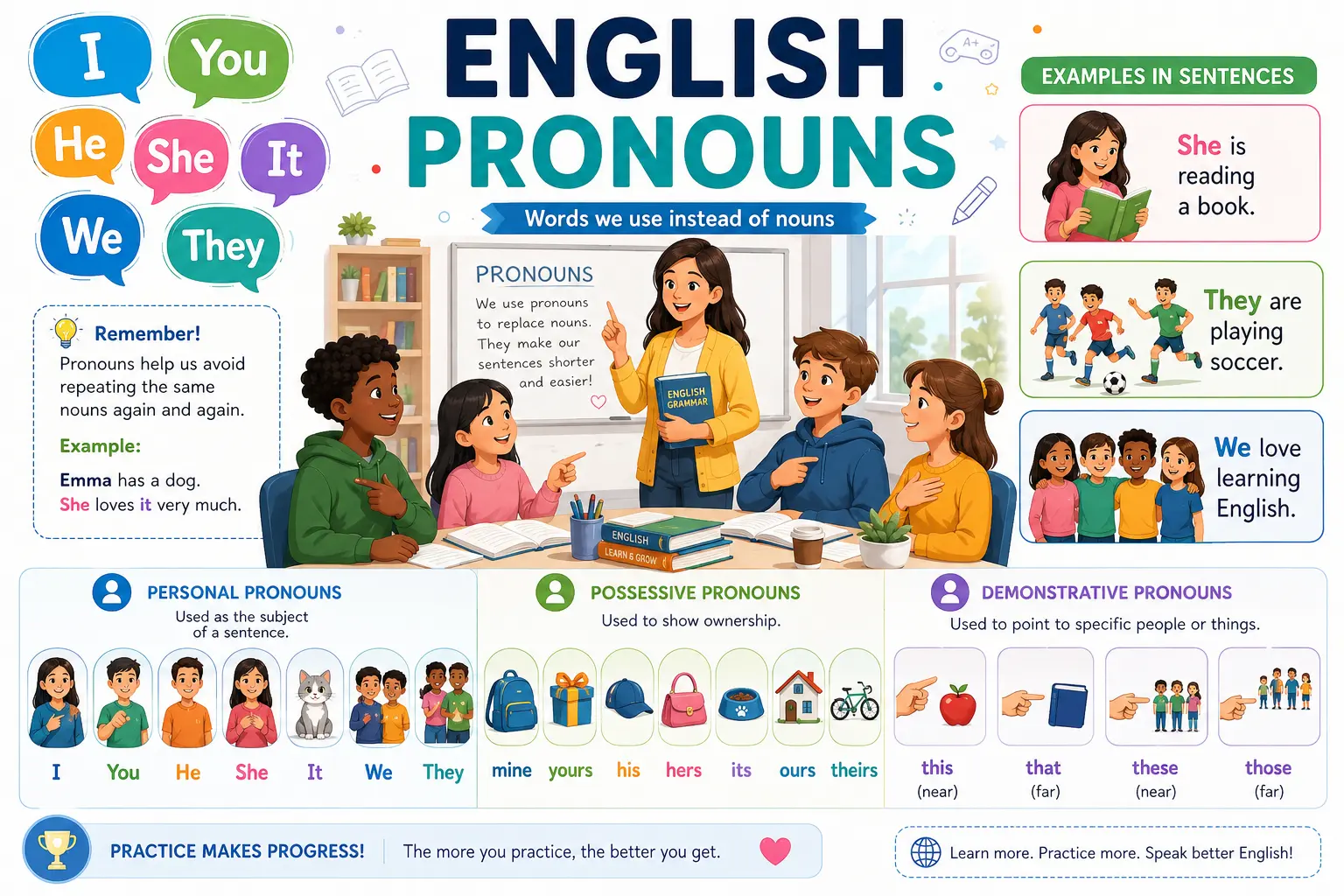
Pronouns in English Grammar: Easy Guide + Examples
What Are Pronouns in English Grammar? Learn pronouns in English grammar with simple explanations, examples, and easy rules. Covers personal and reflexive pronouns clearly. In English grammar, pronouns are words that replace nouns in a sentence. They help avoid repetition and make sentences clearer and easier to understand. This lesson explains pronouns in English grammar,…
-
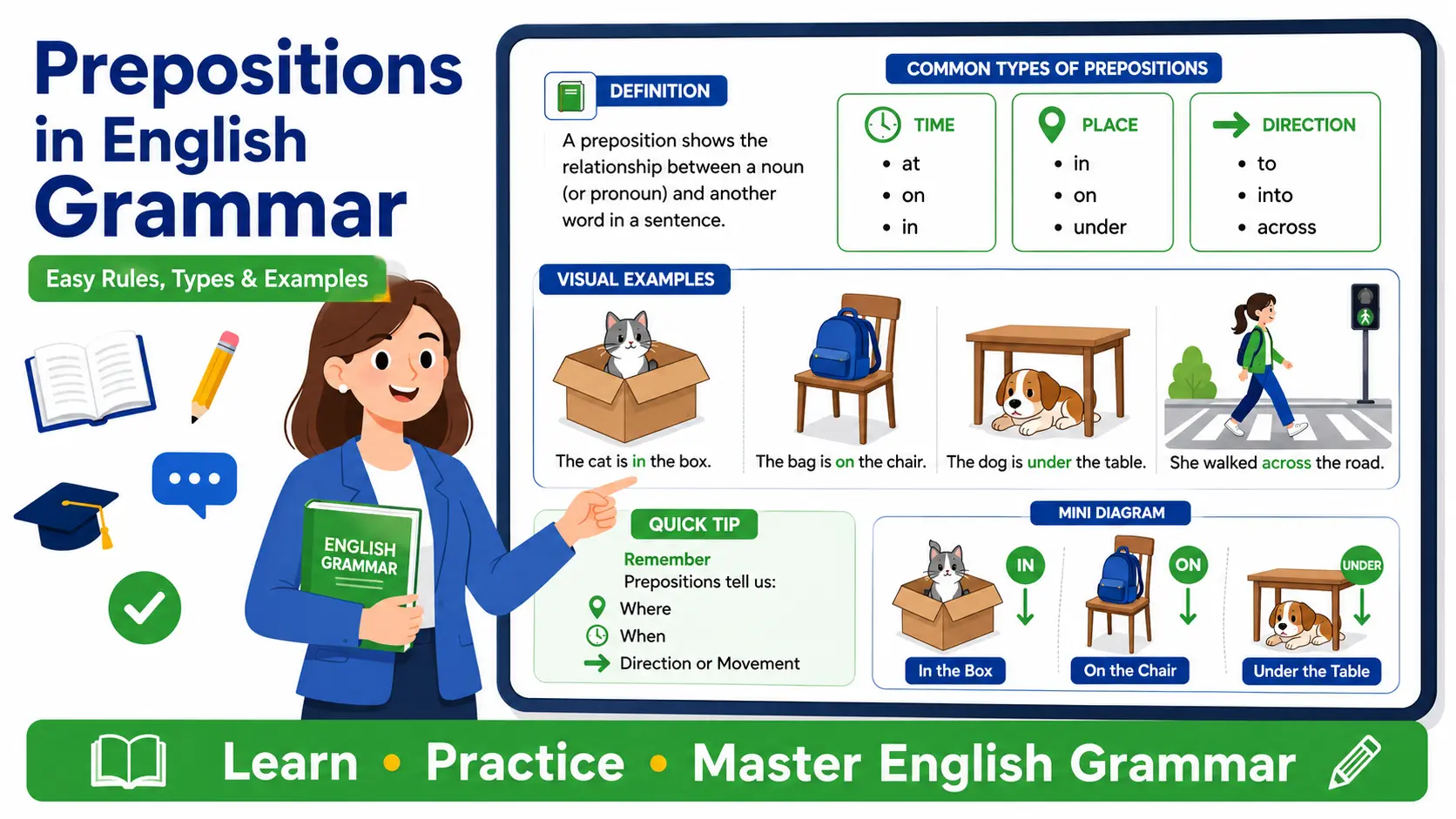
Prepositions in English Grammar (Complete Guide with Examples)
Introduction Prepositions in English are important grammar tools that show relationships between words in a sentence. In this guide, you will learn the definition, types, and examples of prepositions in English in a simple and clear way. Prepositions are commonly used in everyday communication. Learning how to use them correctly helps make your sentences clearer…
-
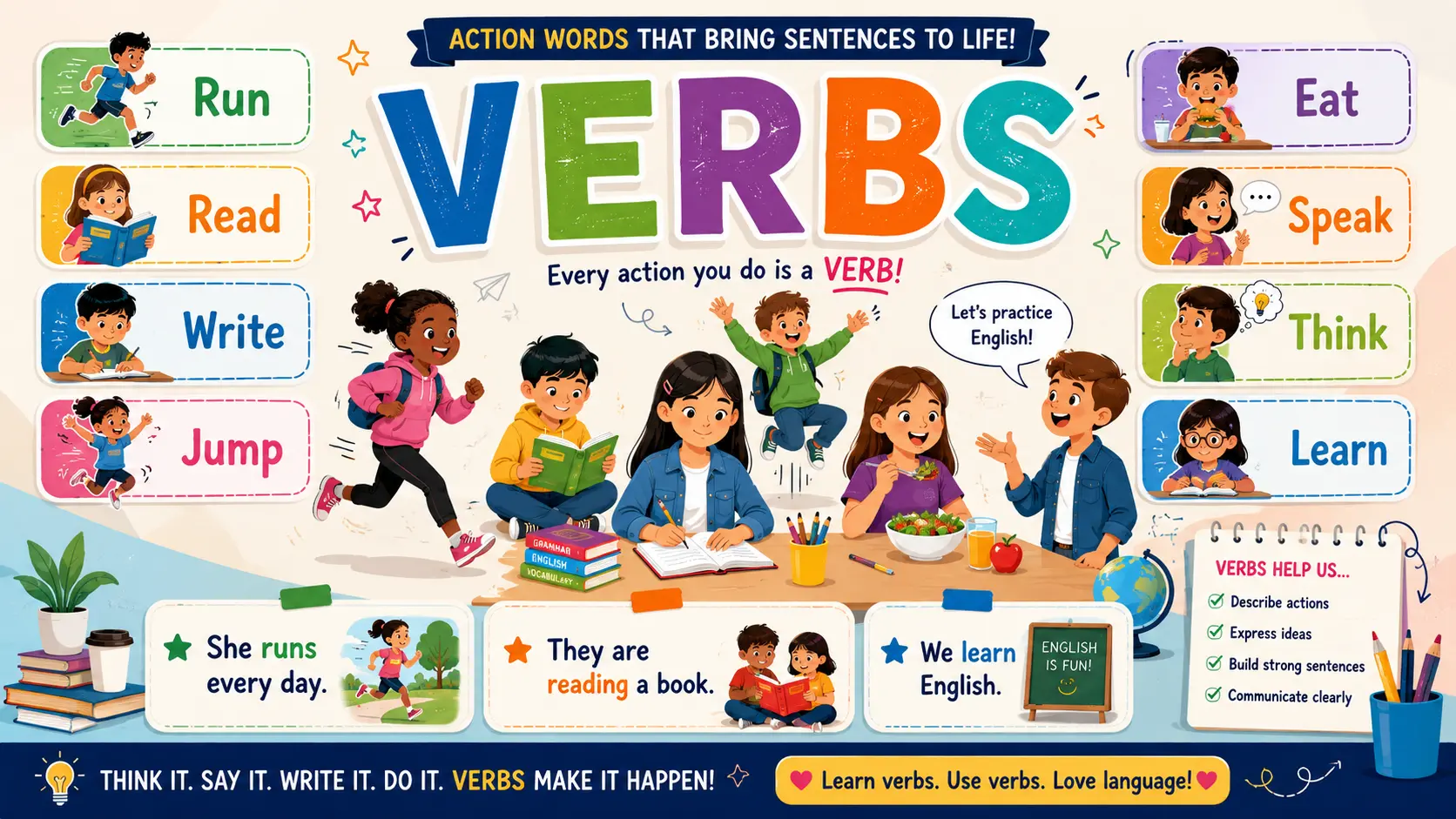
Verbs in English Grammar Explained
Verbs in English grammar are essential for forming sentences. A verb describes an action, state, or occurrence. Without verbs, a sentence is incomplete. For example: Every sentence must contain at least one verb, which makes verbs one of the most important parts of English grammar. Think of verbs as the engine under the hood of…
Grammar Rules
-
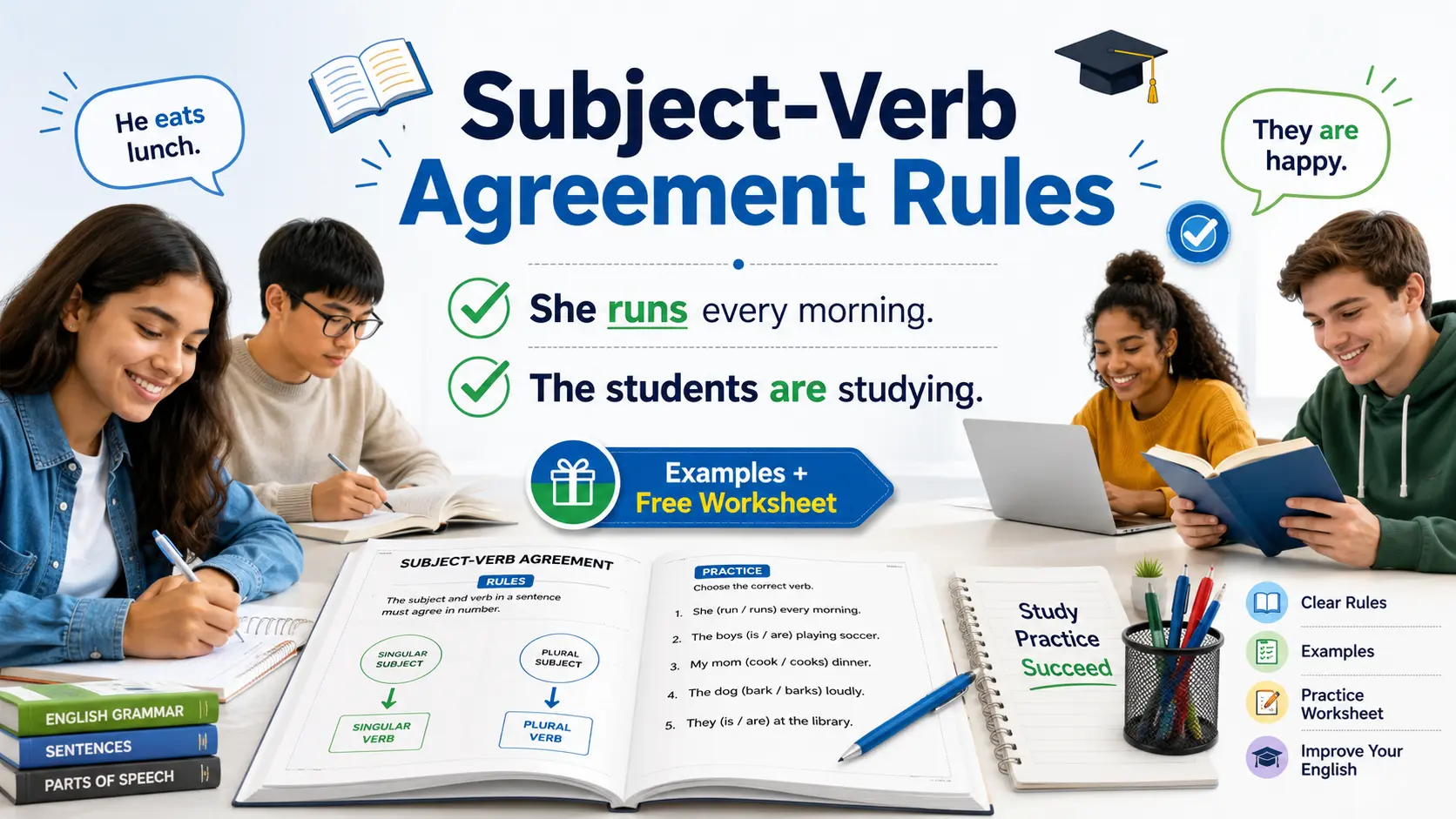
Subject-Verb Agreement Rules and Regulations
Subject-Verb Agreement Rules Subject-verb agreement is one of the most important rules in English grammar. It means the verb must match the subject in number (singular or plural) and person. A singular subject takes a singular verb, while a plural subject takes a plural verb. Let’s be honest: English grammar can feel like a game…
-
Countable vs Uncountable Nouns (Easy Guide + Examples)
Countable vs uncountable nouns are an important part of English grammar that help you use words correctly in sentences. In English grammar, nouns are divided into countable nouns and uncountable nouns. Understanding the difference helps you use articles, quantities, and verbs correctly. This guide explains countable vs uncountable nouns with clear rules, examples, and common…
-
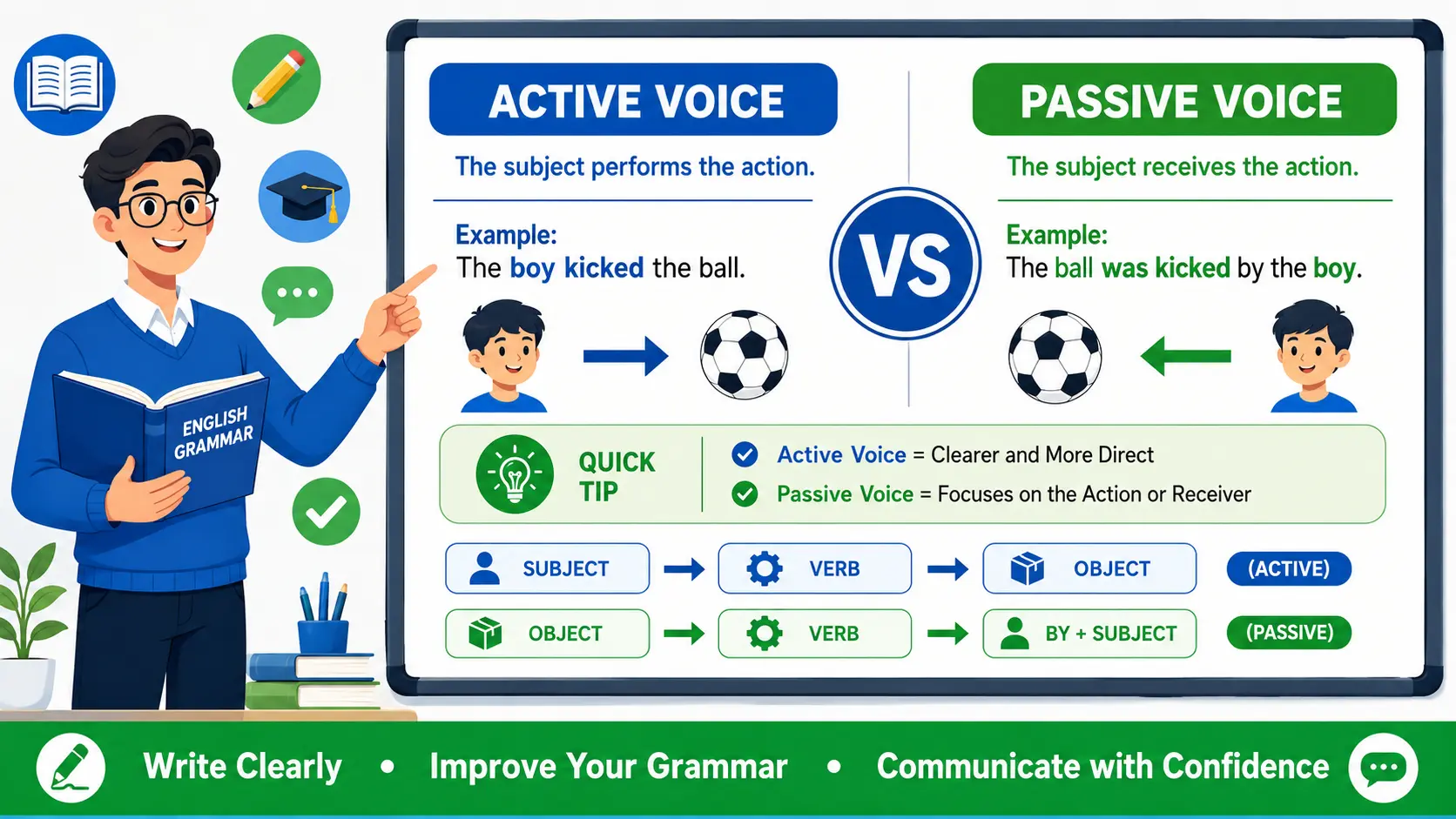
Active Voice vs. Passive Voice: The Secret to Stronger Sentences
Active voice vs. passive voice is one of those grammar topics that sounds incredibly intimidating—like something straight out of a dusty textbook. But in reality, it’s just about energy and focus. Understanding the difference isn’t just about passing a grammar test; it is the ultimate secret weapon for making your writing clearer, more punchy, and…
-
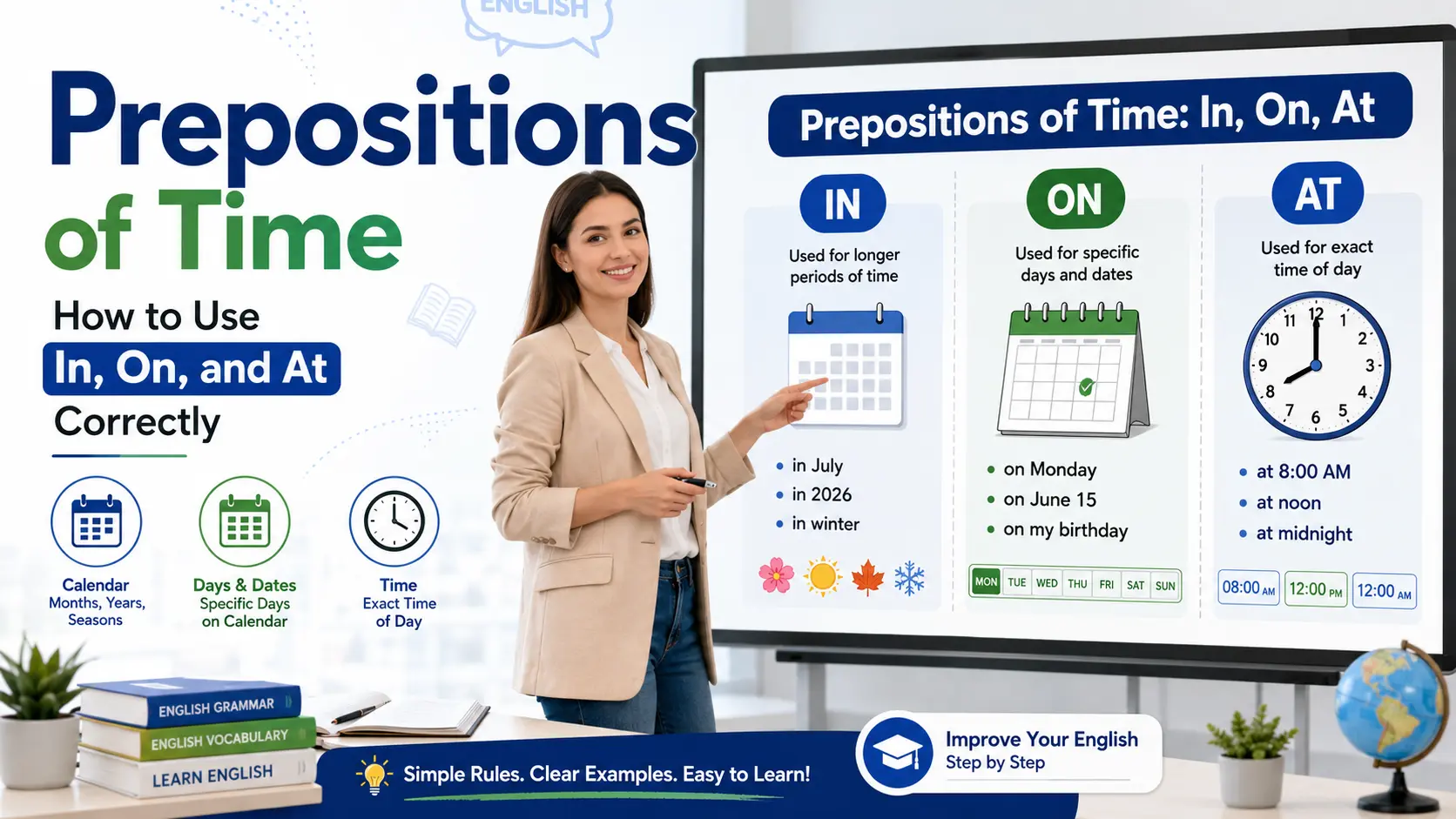
Prepositions of Time: In, On, At
Prepositions of time serve as time markers in English grammar. They establish temporal relationships between the action (verb) and a specific point in time, allowing your reader or listener to anchor events accurately on a timeline. Without prepositions of time, telling stories, setting appointments, or detailing historical sequences would become disjointed and confusing. Understanding these…
English Tenses
-
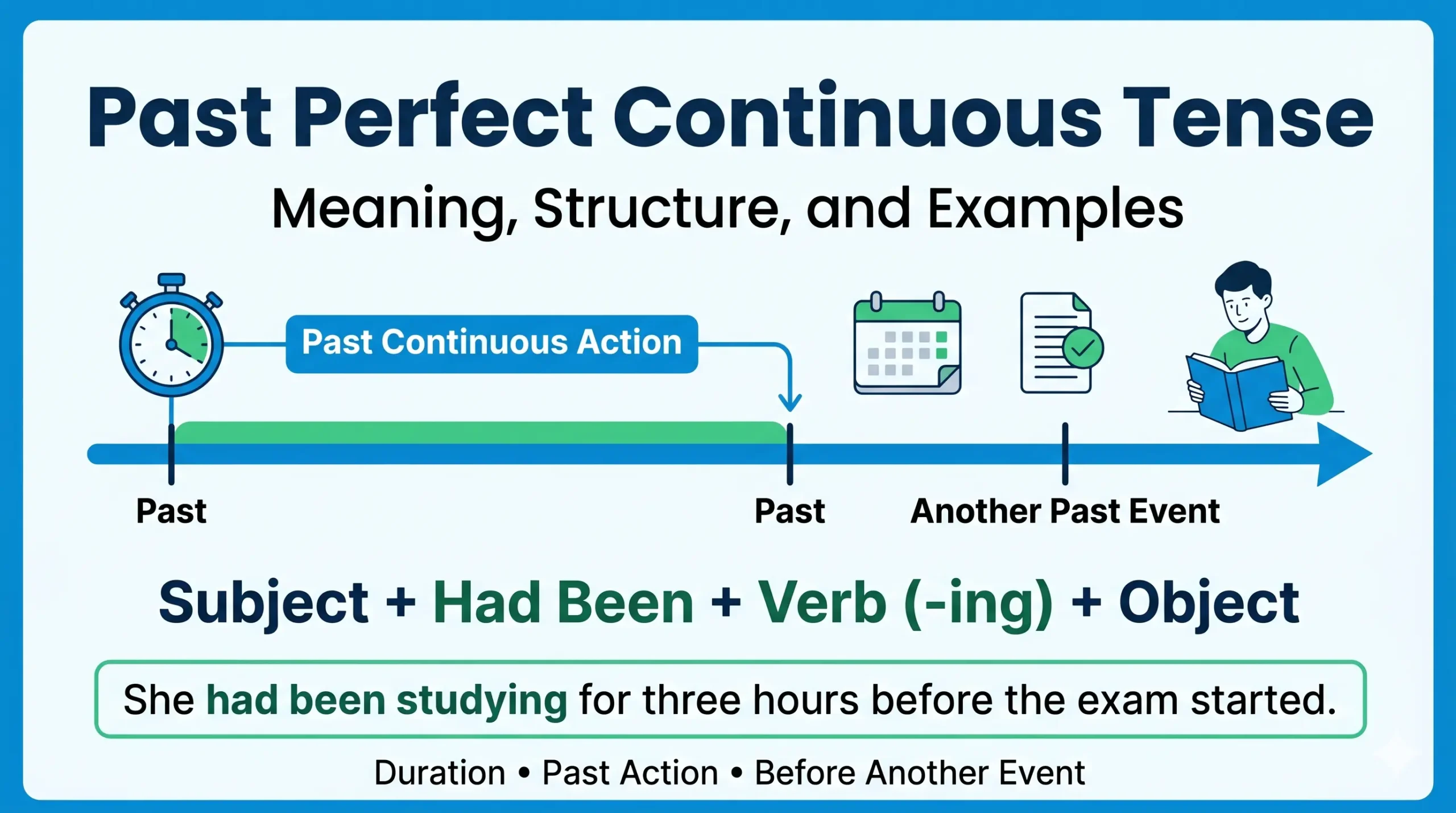
Past Perfect Continuous Tense: Meaning, Structure, and Examples
The Past Perfect Continuous Tense is one of the advanced English tenses that many students find difficult at first. However, once you understand its purpose and structure, it becomes much easier to use in both speaking and writing. This tense is used to describe an action that started in the past, continued for some time,…
-
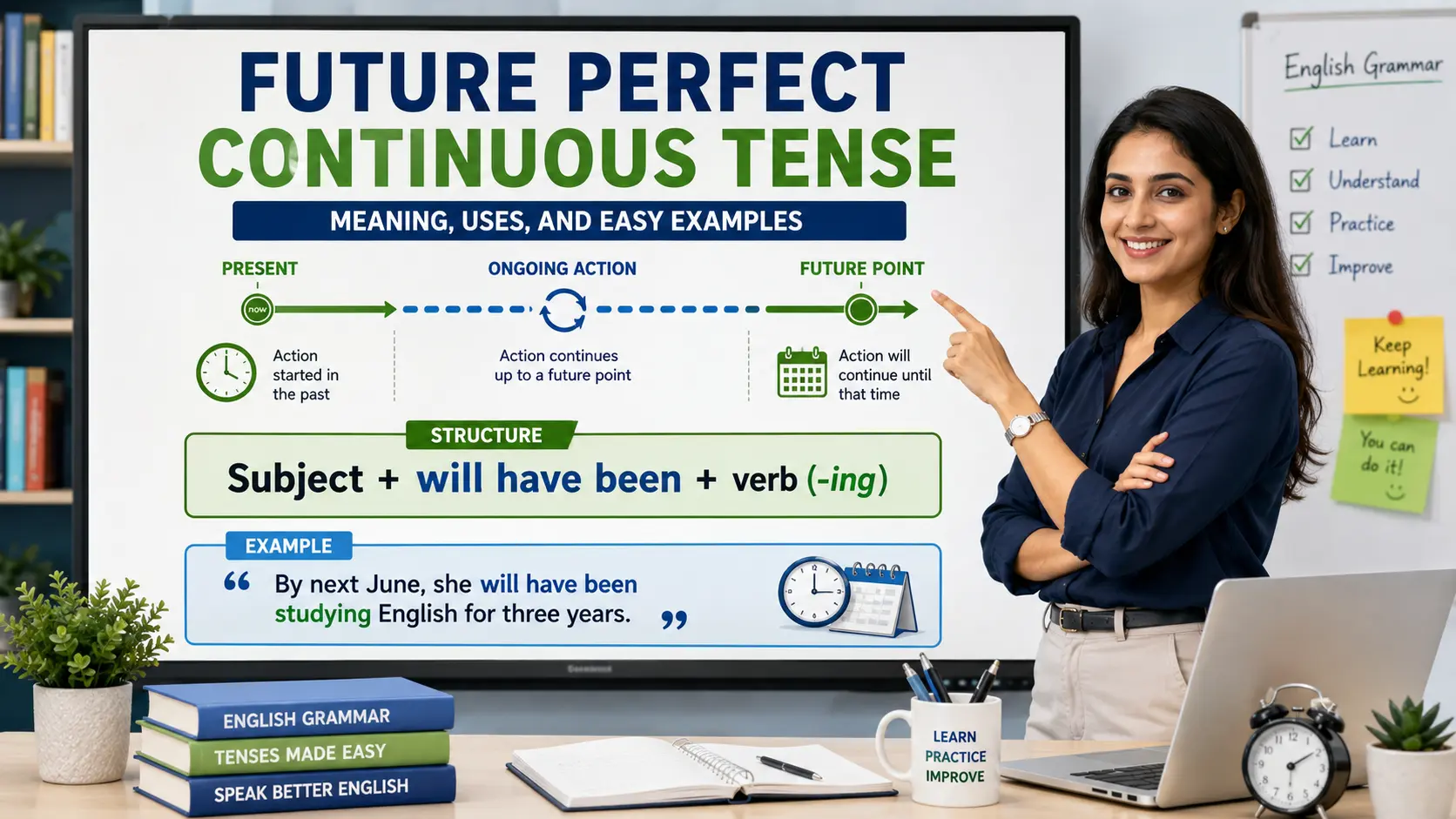
Future Perfect Continuous Tense: Meaning, Uses, and Easy Examples
Learning English grammar can sometimes feel confusing, especially when you come across long tense names like the Future Perfect Continuous Tense. At first glance, the name may sound difficult, but once you understand its structure and purpose, it becomes much easier to use in everyday communication. I remember the first time I saw this tense…
-
Future Perfect Tense: Rules, Uses, and Examples
The Future Perfect Tense is used to describe an action that will be completed before a certain time or event in the future. It helps show that something will already be finished at a specific point in time. This tense is very useful in both writing and speaking because it allows you to talk clearly…
-
Future Continuous Tense: Rules, Uses, and Examples
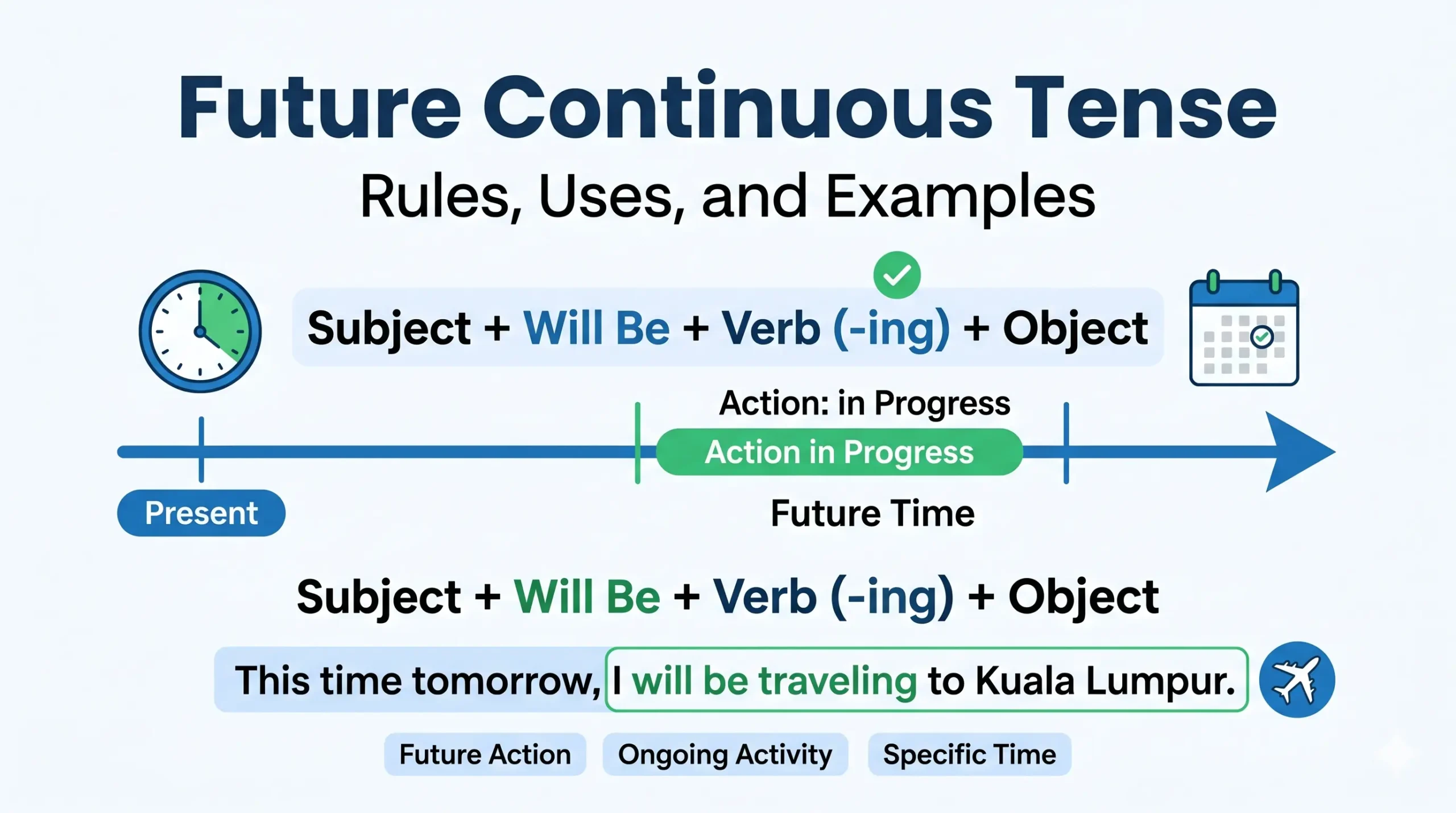
The Future Continuous Tense is used to describe an action that will be happening at a specific time in the future. It is one of the most useful English grammar tenses because it helps speakers talk about future plans, ongoing activities, and predictions naturally. In everyday conversations, native English speakers often use the future continuous…
-
Simple Future Tense: Definition, Rules, and Easy Examples
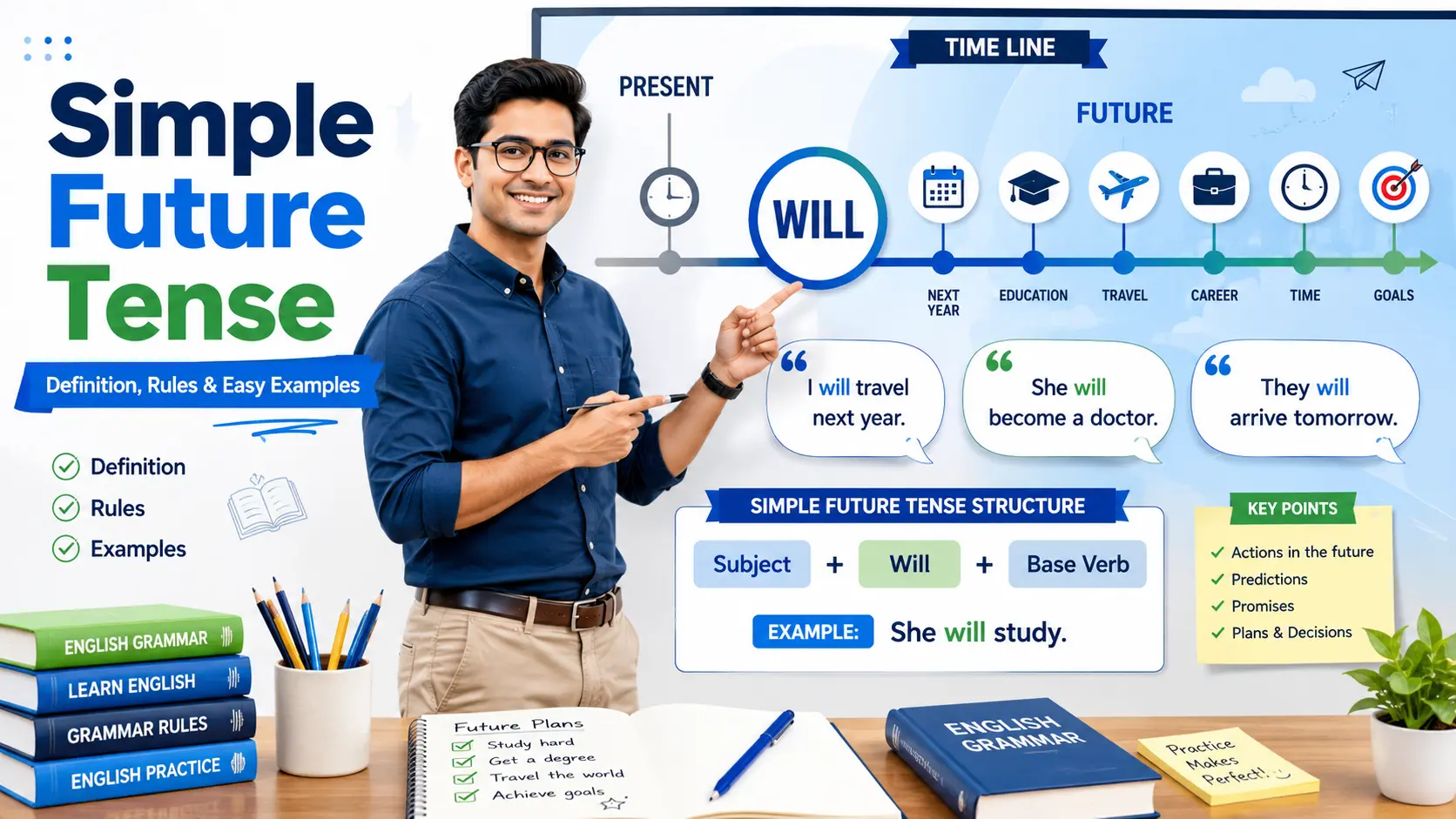
The English Grammar Simple Future Tense is used to describe actions that will happen in the future. It helps us talk about plans, predictions, promises, decisions, and future events. This tense is very important in daily communication because we often speak about what we will do tomorrow, next week, or in the future. Think about…
-
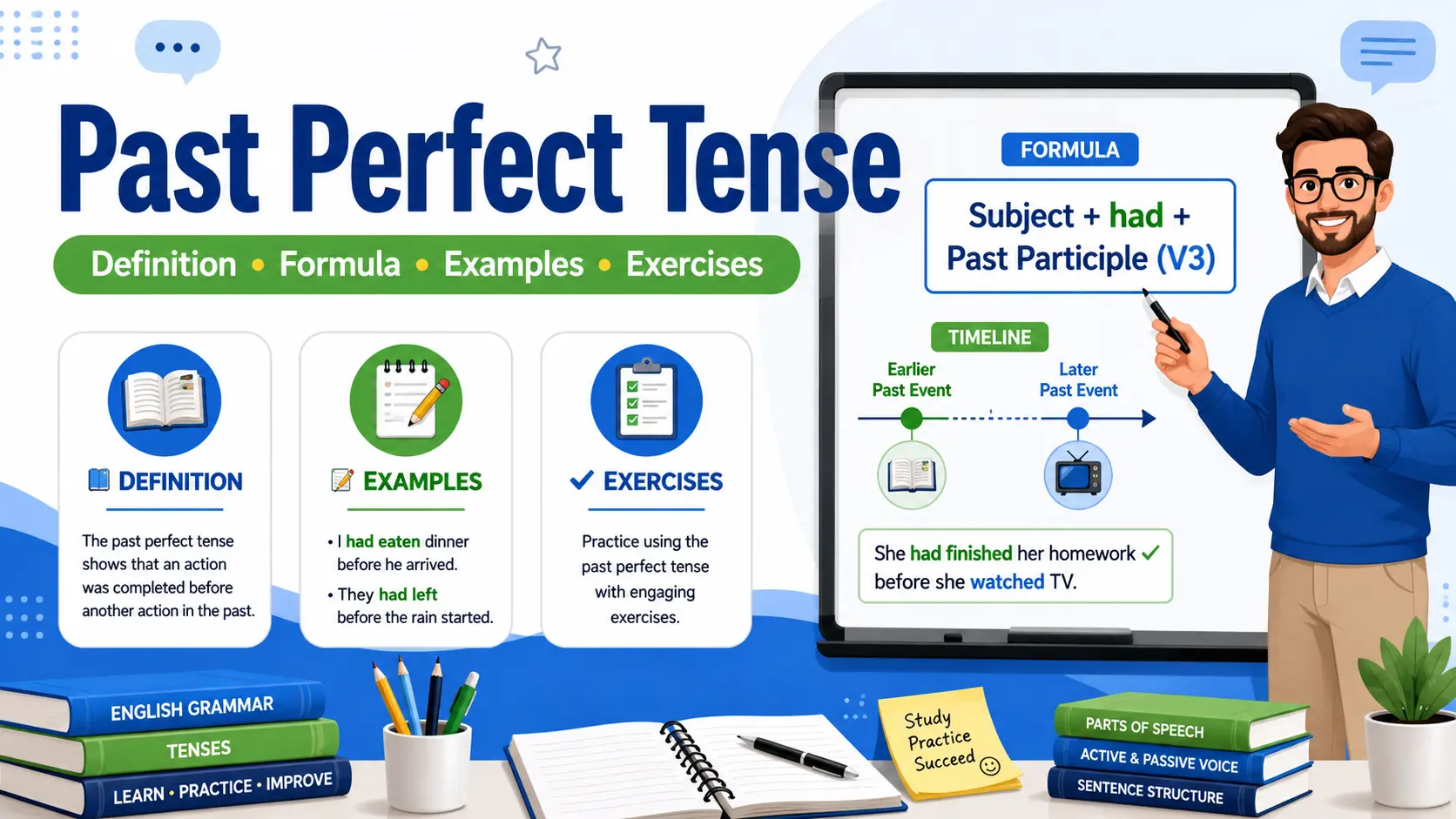
Past Perfect Tense (Definition, Formula, Examples & Exercises)
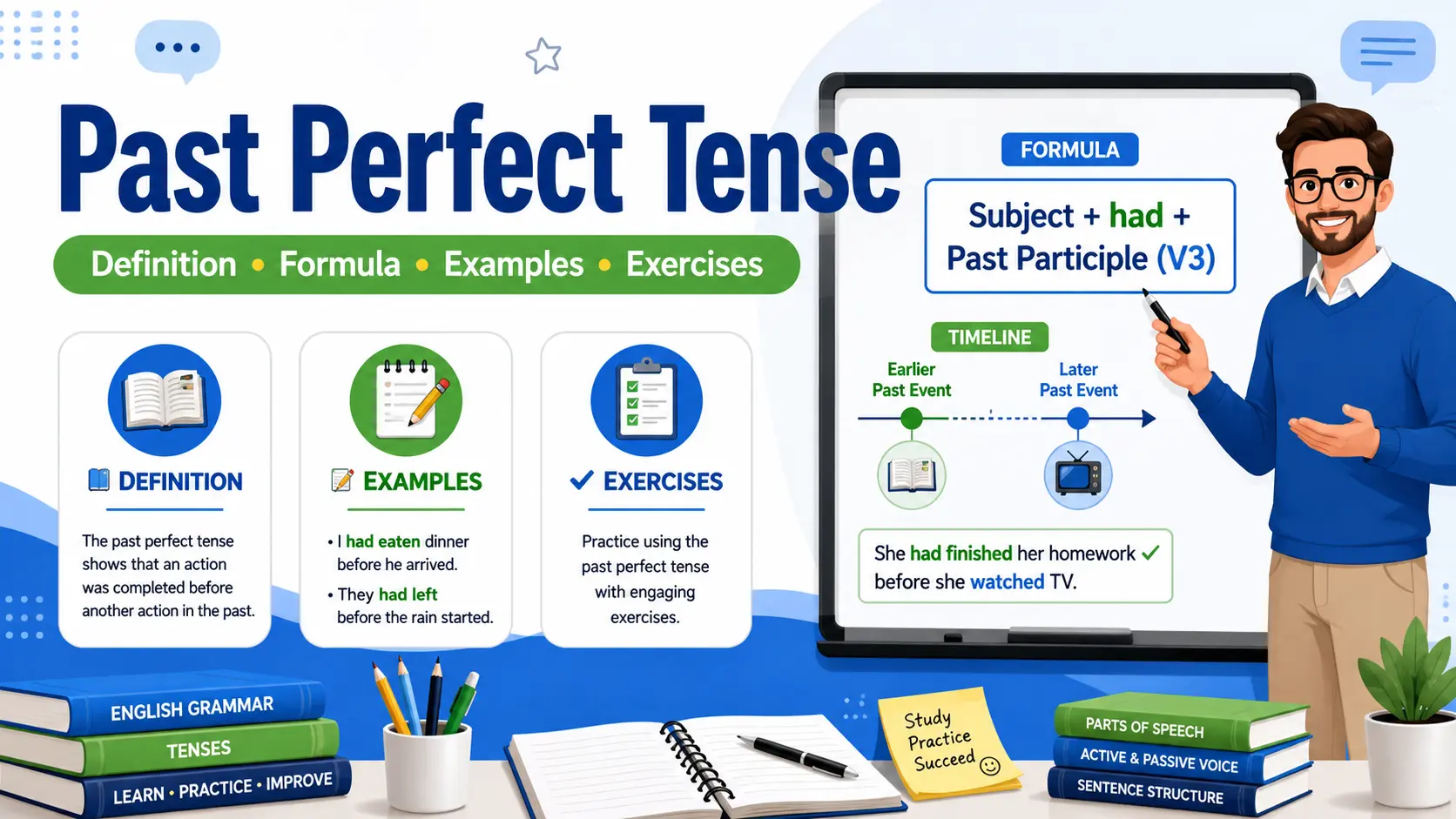
We’ve all been there trying to tell a great story about something that happened last weekend, only to realize we need to jump even further back in time to explain why it happened. It’s like saying, “By the time I finally sat down to watch the match, my friend had already accidentally ruined the score…
-
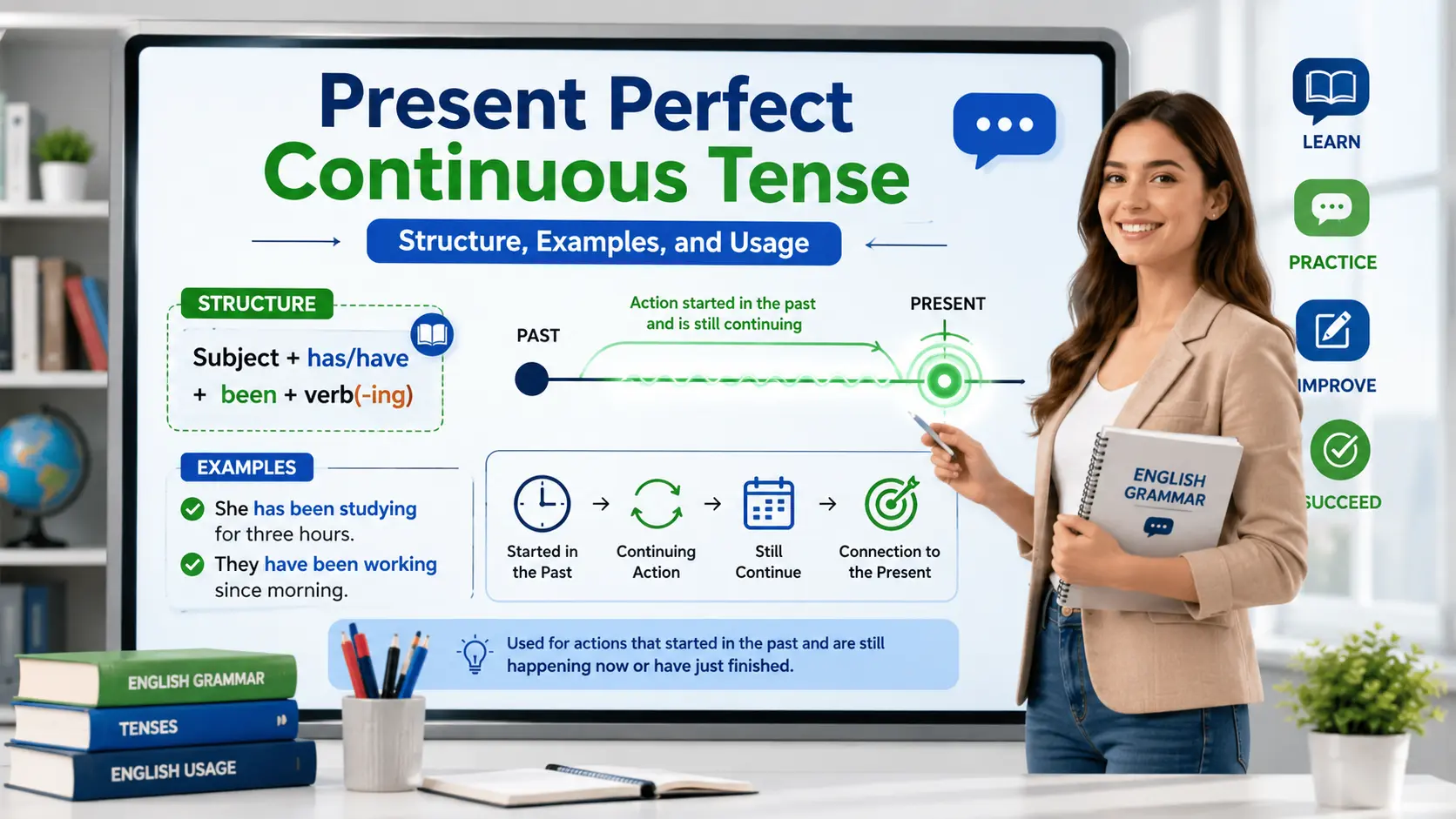
Present Perfect Continuous Tense: Structure, Examples, and Usage
Introduction The Present Perfect Continuous Tense is used to describe actions that started in the past and are still continuing or have recently stopped but still have a visible result. This tense focuses on the duration of an action rather than just the result. Understanding this tense is important for improving fluency and expressing ongoing…
-
Past Continuous Tense: Easy Explanation, Examples
Introduction The Past Continuous Tense is an important part of English grammar that helps you describe actions happening at a specific time in the past. If you want to improve your English grammar, understanding the Past Continuous Tense is essential. This tense helps you describe actions that were happening at a specific moment in the…
-
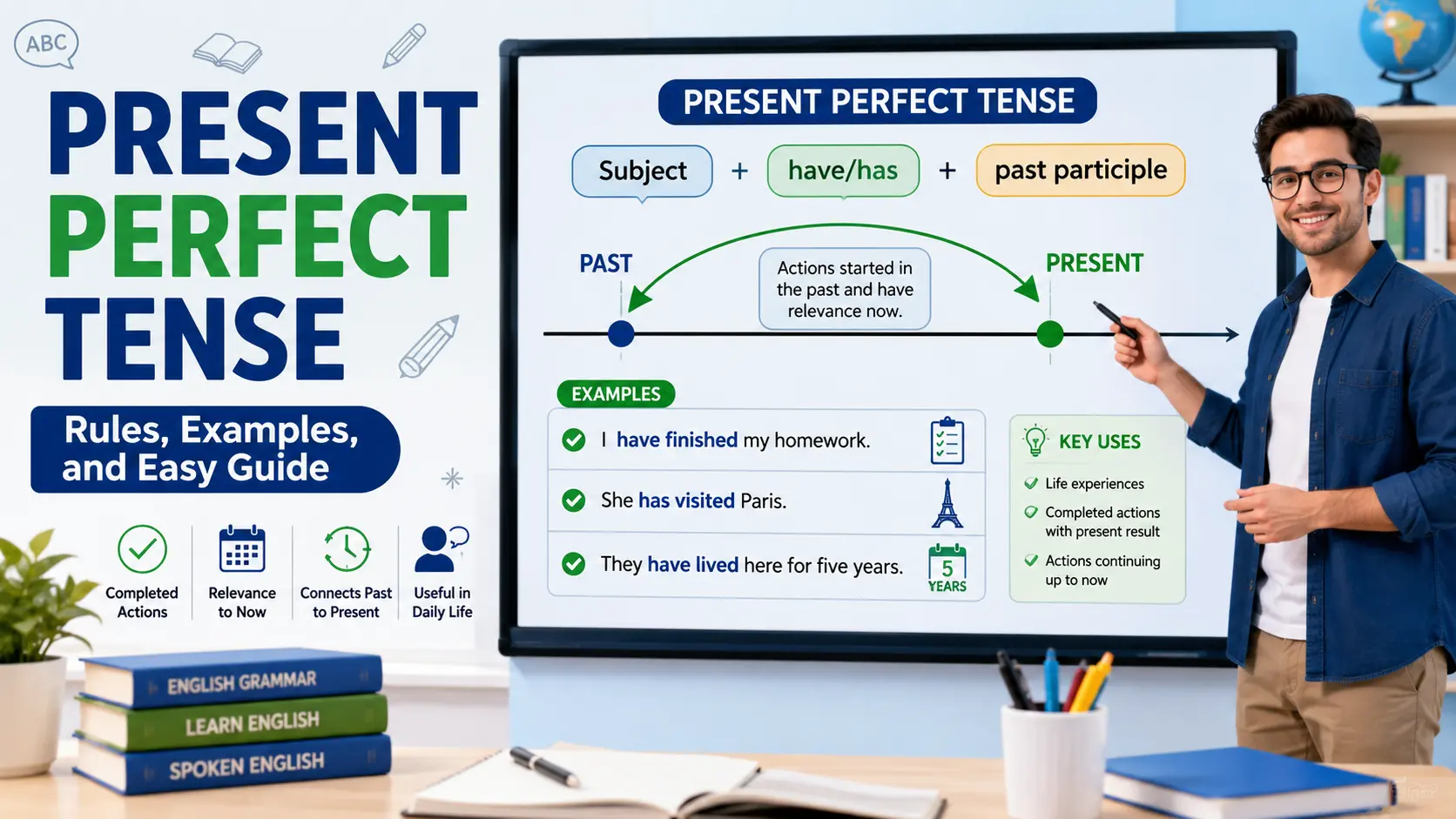
Present Perfect Tense: Rules, Examples, and Easy Guide
Present Perfect Tense The present perfect tense is one of the most important topics in English grammar. It is used to describe actions that happened at an unspecified time before now or actions that started in the past and continue in the present. If you are learning English, understanding the present perfect tense will help…
-
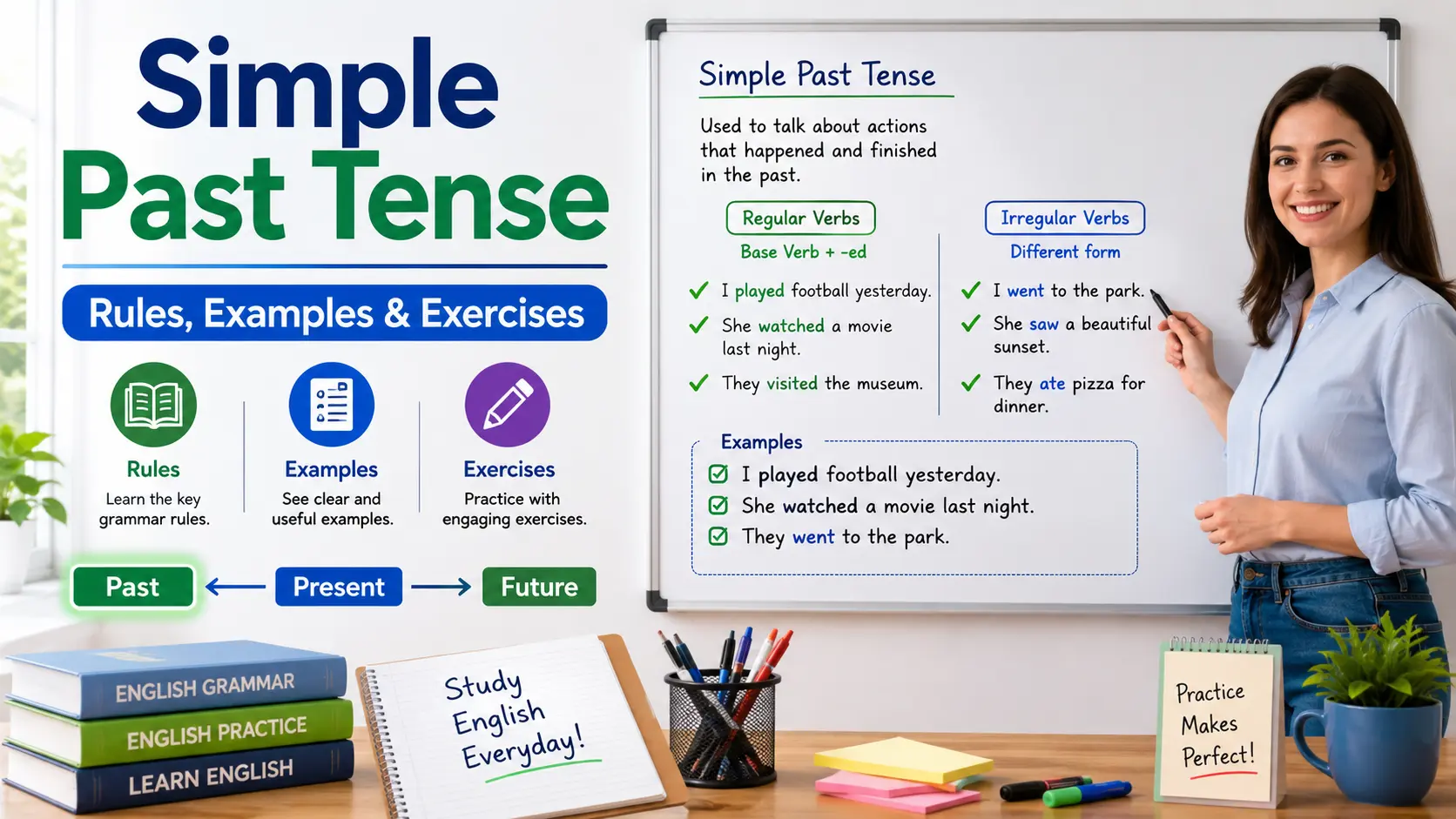
Simple Past Tense (Rules, Examples & Exercises)
📘 What Is the Simple Past Tense? The simple past tense is used to describe actions that happened and finished in the past. It is one of the main topics in English grammar, especially when learning different English tenses. 👉 These actions are already completed — they are not happening now. Examples: Think of the…
-
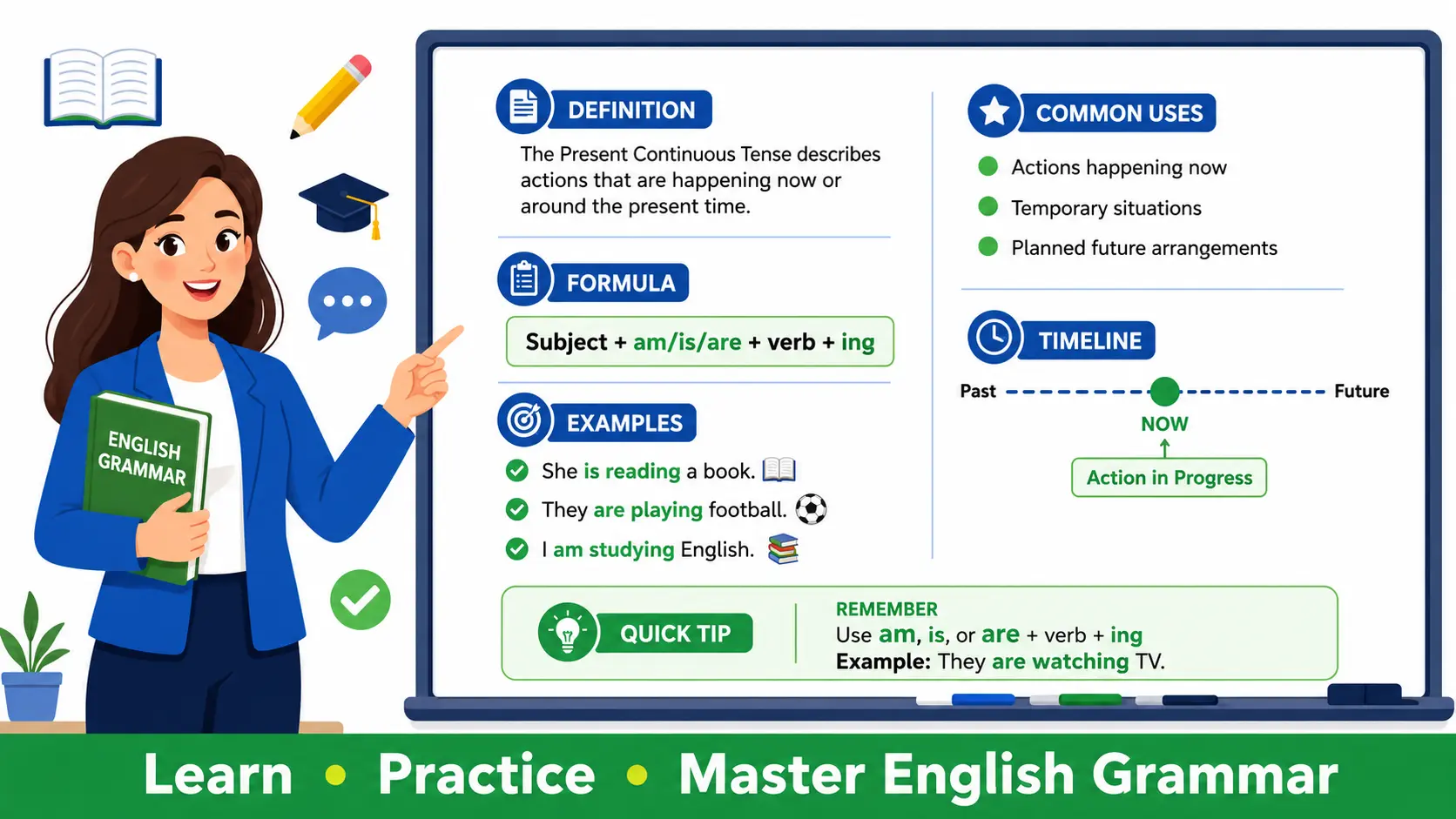
Present Continuous Tense Rules (With Examples & Easy Guide)
Present Continuous Tense Rules Present continuous tense rules are essential for describing actions happening now or around the present time. The present continuous tense (also called the present progressive tense) is used to describe actions happening now or around the present time. By learning these present continuous tense rules, you can speak and write English…
-
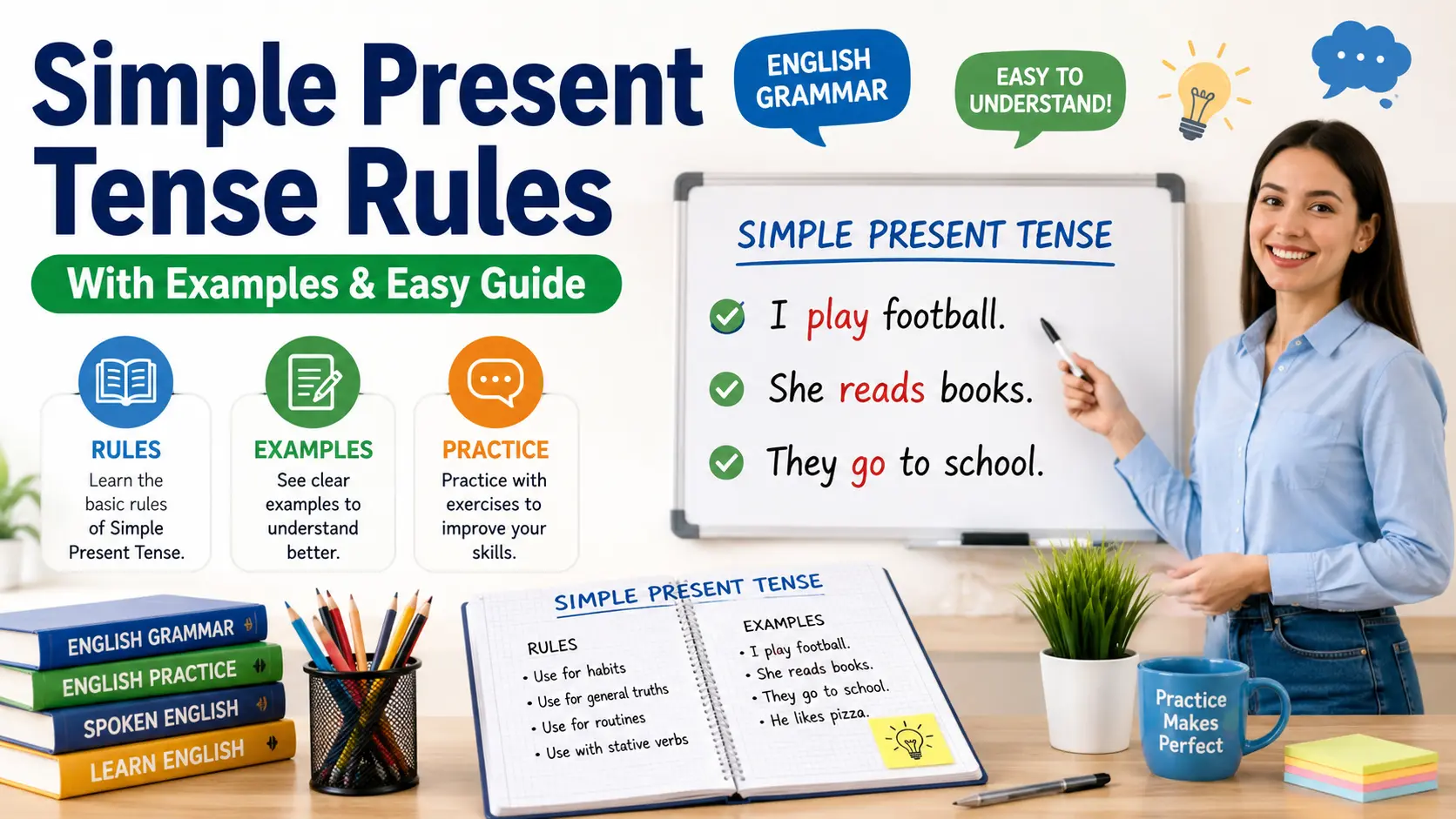
Simple Present Tense Rules (With Examples & Easy Guide)
Simple Present Tense Rules The simple present tense rules are one of the most important parts of English grammar. They help you describe habits, general truths, and daily actions clearly and correctly. By learning the simple present tense rules, you can speak and write English more clearly and confidently. Let’s be honest: grammar rules can…
Common Mistakes
-
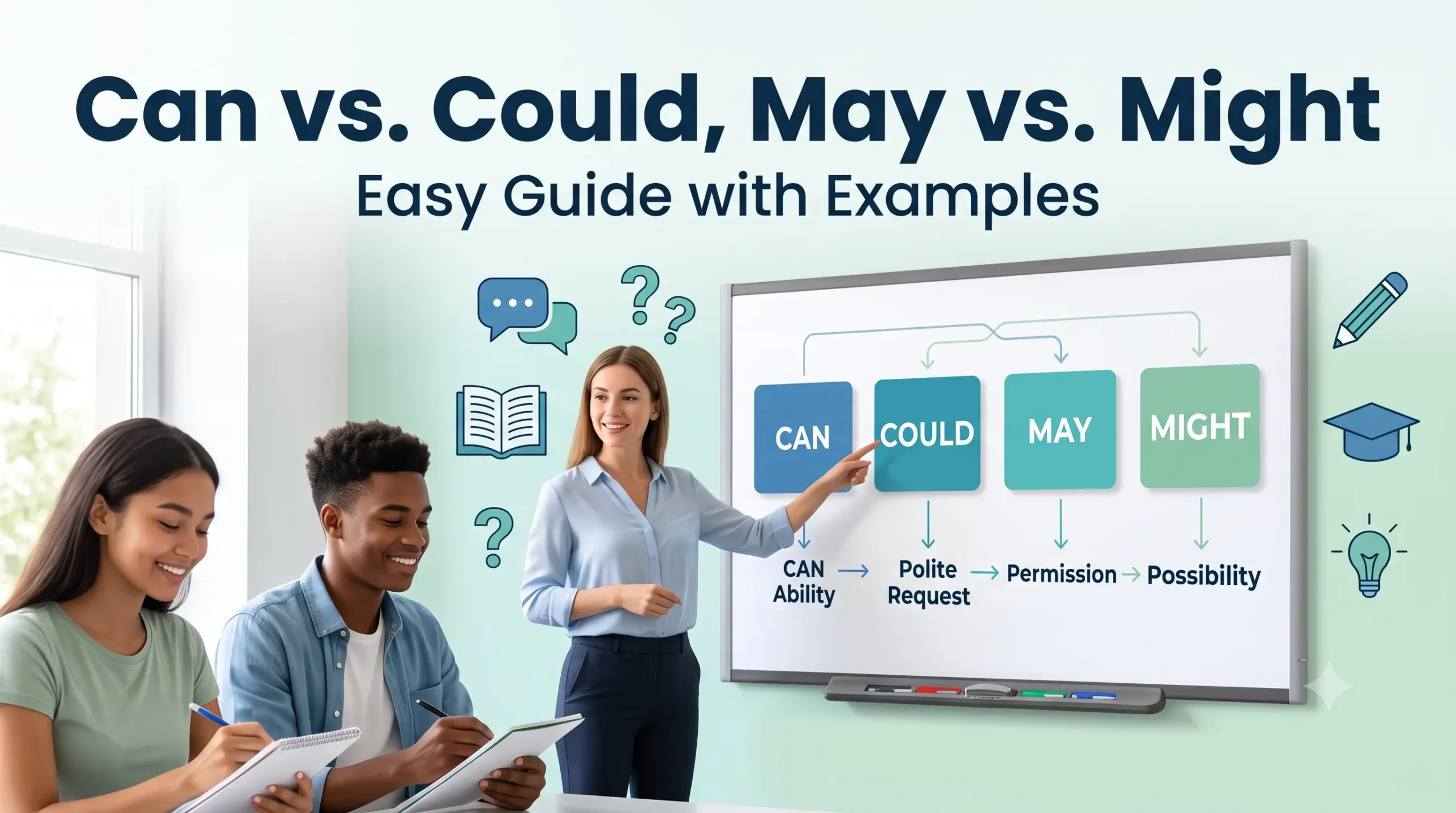
Can, Could, May, and Might: Common Mistakes and How to Use Them Correctly
Can, could, may, and might are among the most commonly confused modal verbs in English. Although they look similar, each one has a different meaning and purpose. In this guide, you’ll learn the differences, avoid common mistakes, and use them confidently in everyday English. Have you ever paused while writing an email and wondered whether…
-
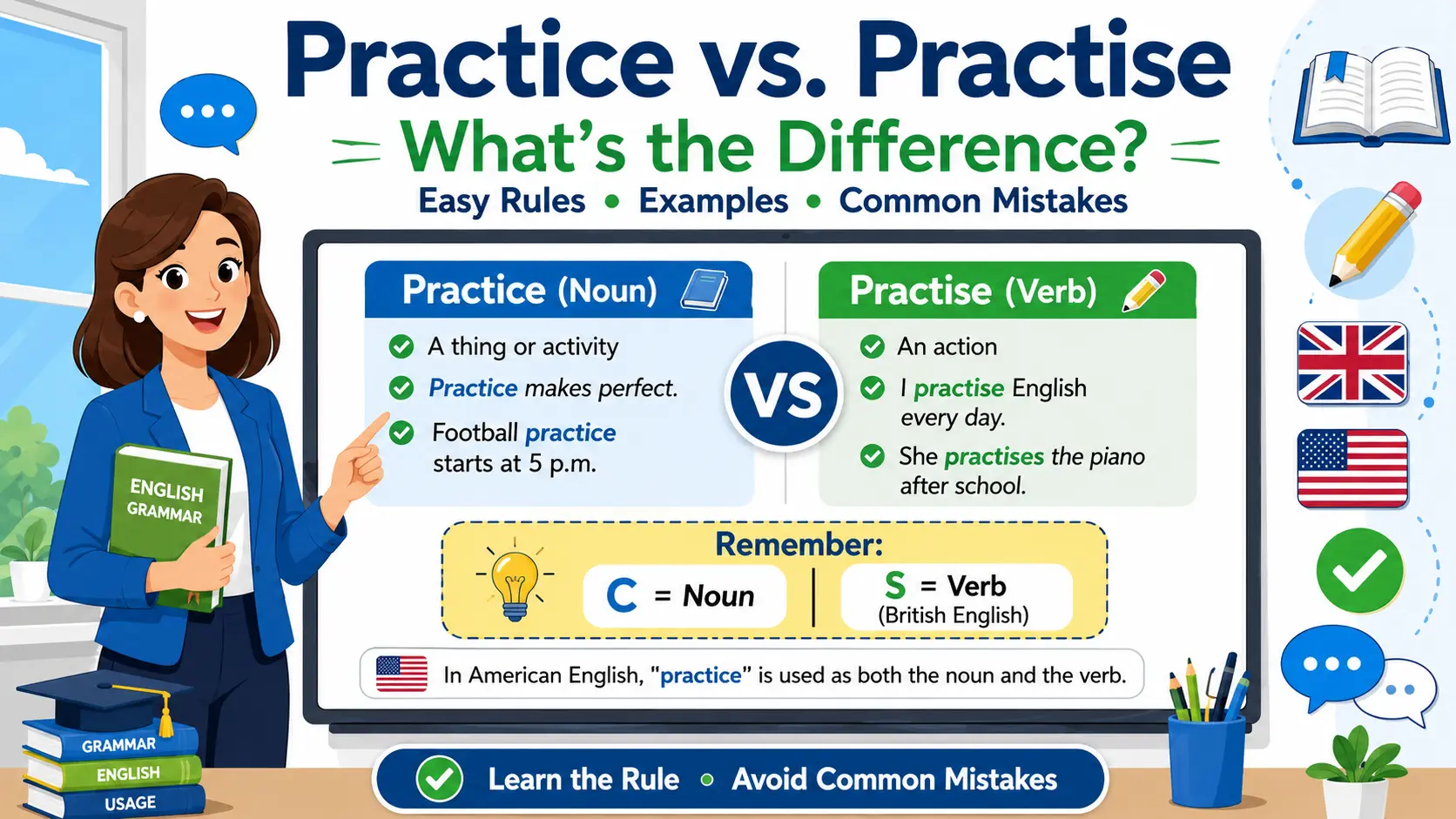
Practice vs. Practise: What’s the Difference? (Easy Rules, Examples & Common Mistakes)
The difference between practice vs. practise is one of the most common spelling questions in English. Although the words sound identical, they are used differently in British English and American English. Trust me, I’ve been there. It’s one of those linguistic trapdoors in the English language where you find yourself typing a word, looking at…
-
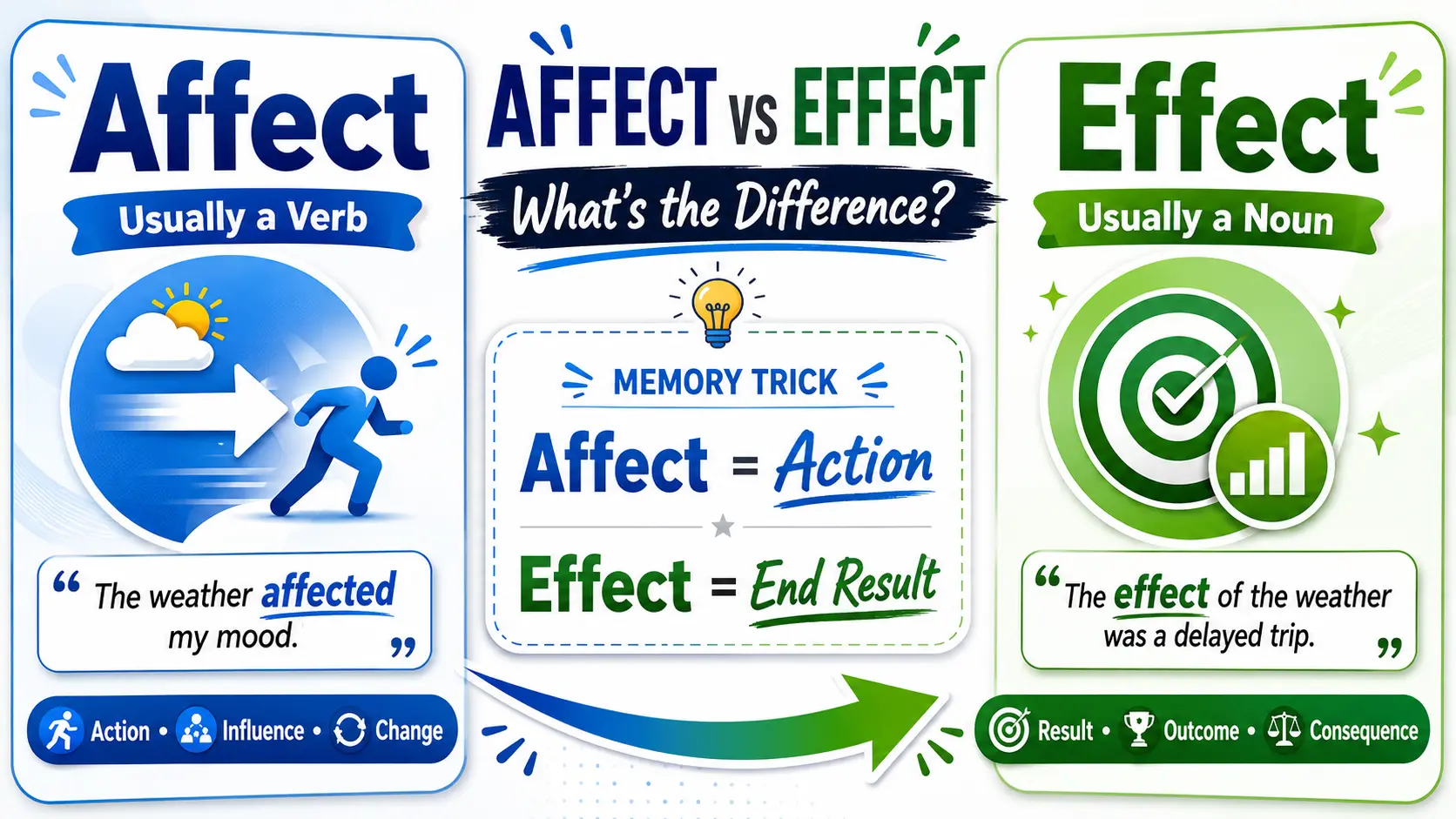
Affect vs Effect: What’s the Difference? (Easy Guide with Examples)
Many English learners struggle with affect vs effect because these words sound similar and are often used in related situations. Let’s be honest: even native English speakers look at a blank screen sometimes, cursor blinking, wondering whether to type affect or effect. It’s one of those grammar hurdles that feels designed to trip us up.…
-
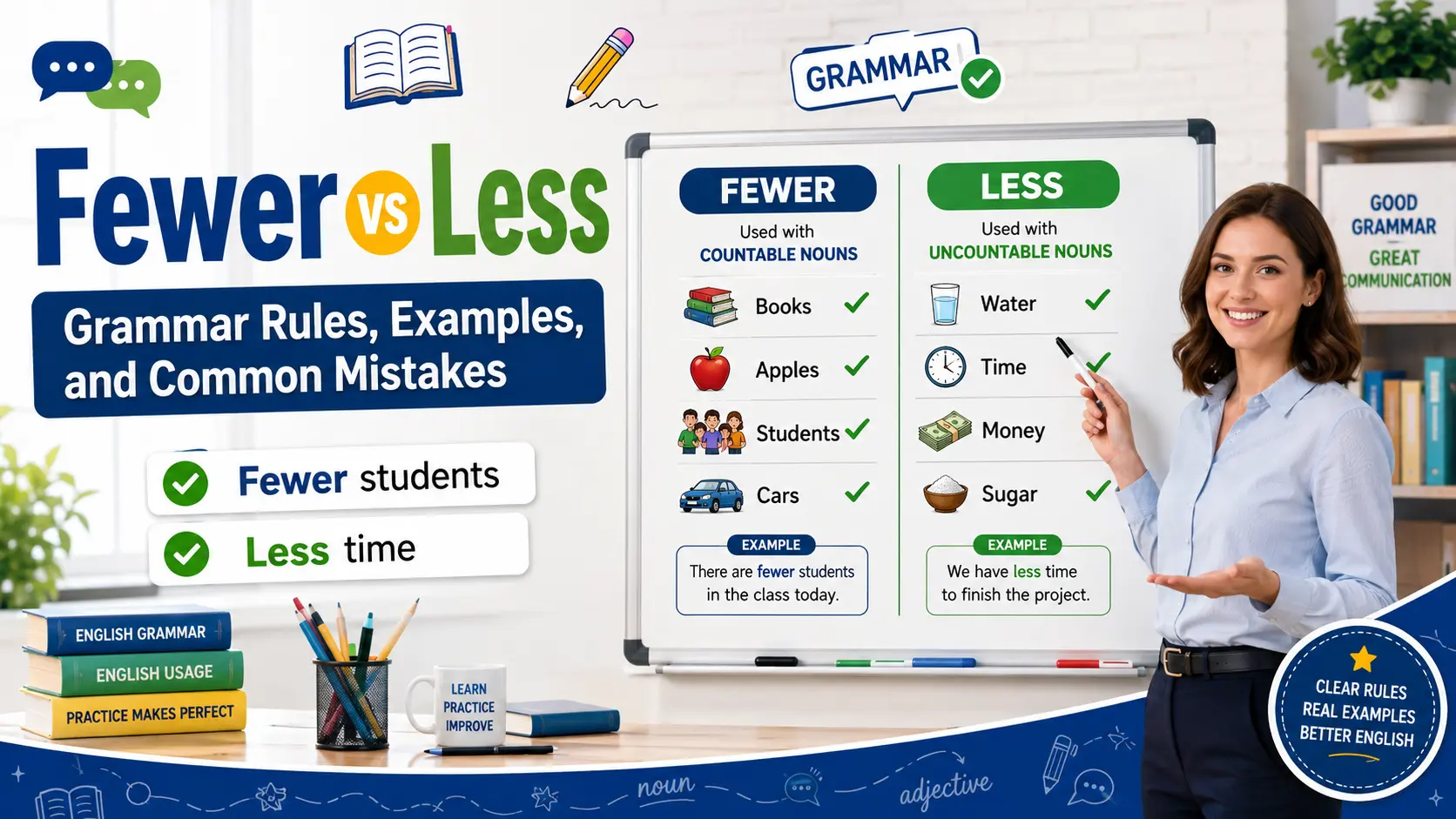
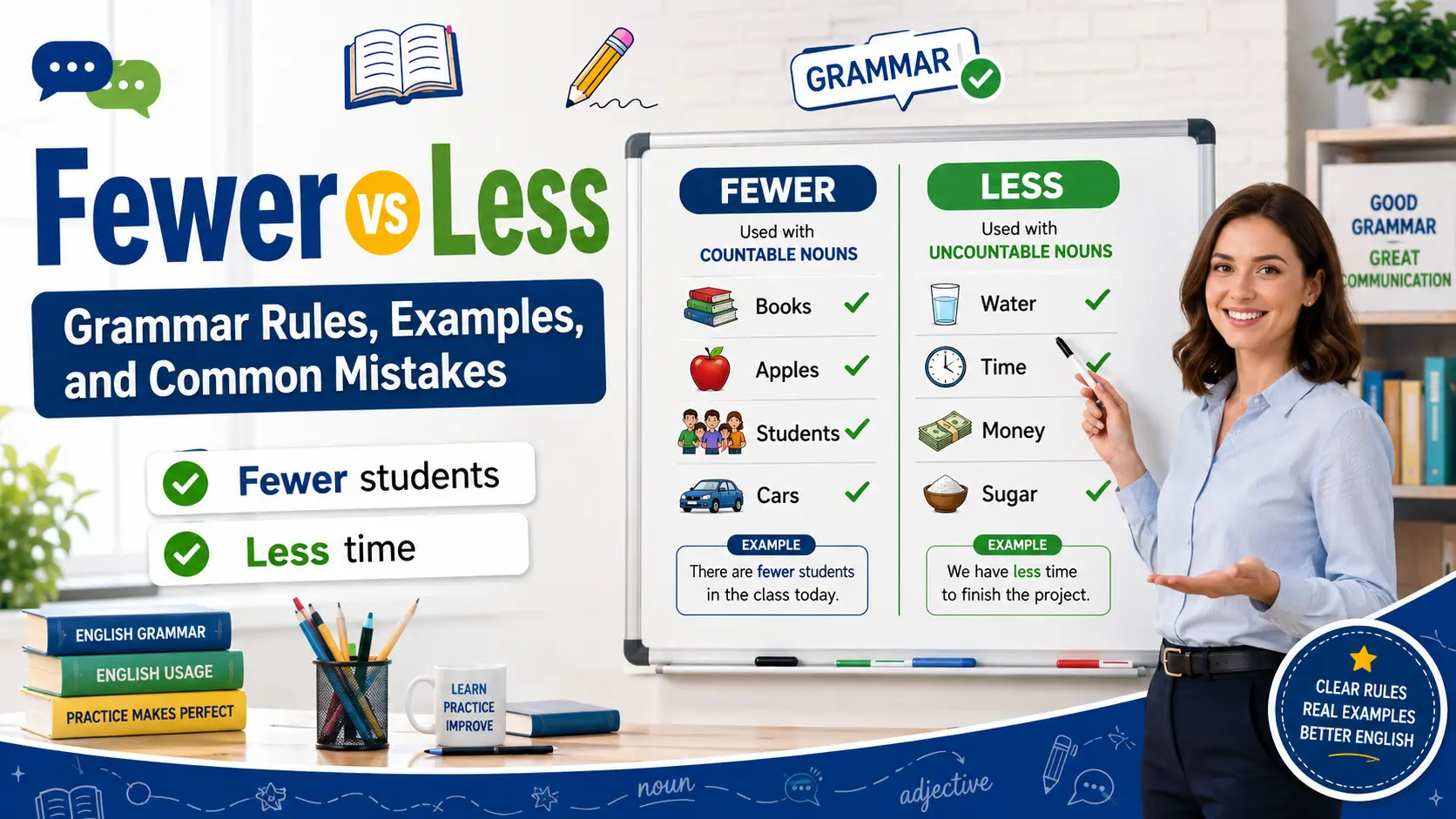
Fewer vs Less: Grammar Rules, Examples, and Common Mistakes
Introduction Fewer vs less is one of the most common grammar mistakes in English. Have you ever wondered whether you should say “fewer people” or “less people”? Many English learners—and even native speakers—confuse these two words. If you’ve ever stood in a grocery store checkout line, stared at the “10 items or less” sign, and…
-
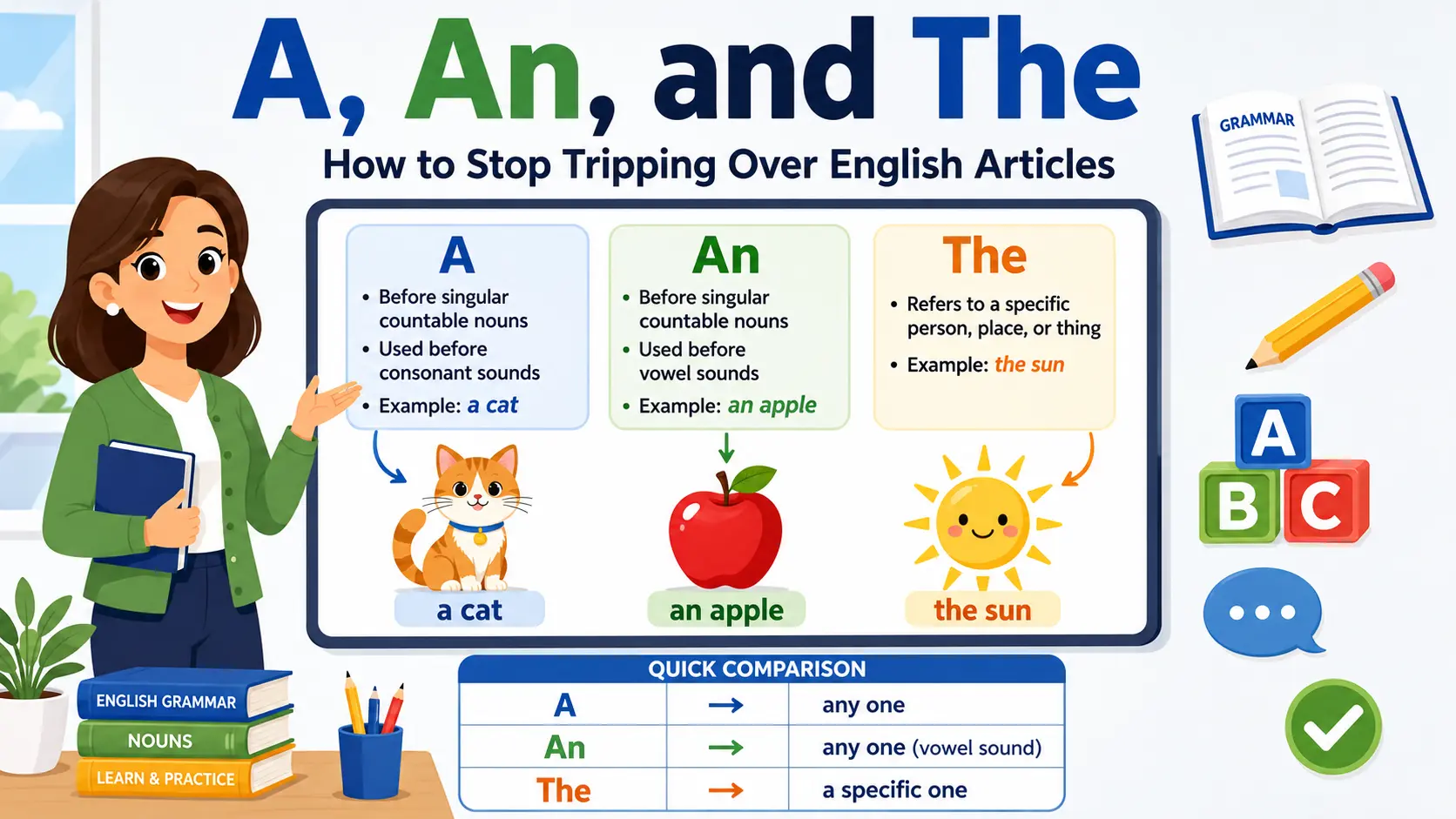
A, An, and The: How to Stop Tripping Over English Articles
A, An, and The Articles (a, an, the) are small words, but they are one of the most common sources of mistakes in English grammar. Many learners struggle to know when to use “a,” “an,” or “the” correctly. Let’s be honest: articles—those tiny words a, an, and the—are the ultimate grammar trolls. They are incredibly…
-
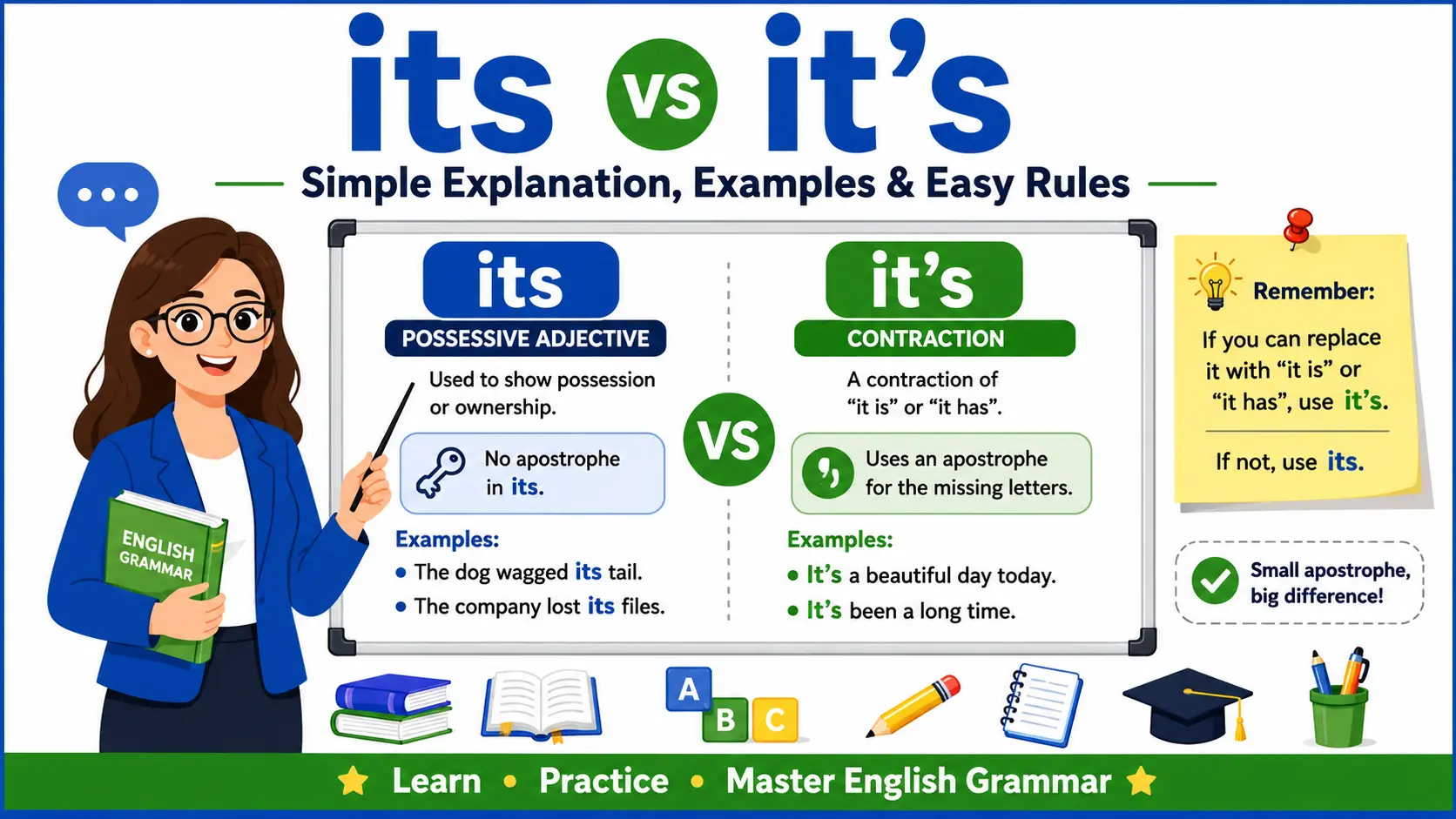
Its vs it’s : Simple Explanation, Examples & Easy Rules
Introduction Its vs it’s is one of the most common grammar mistakes in English. Many learners confuse these words because they look similar and sound the same. If you’ve ever stared at your screen for a full minute, hovering your thumb over the backspace key while trying to figure out which one to use, please…
-
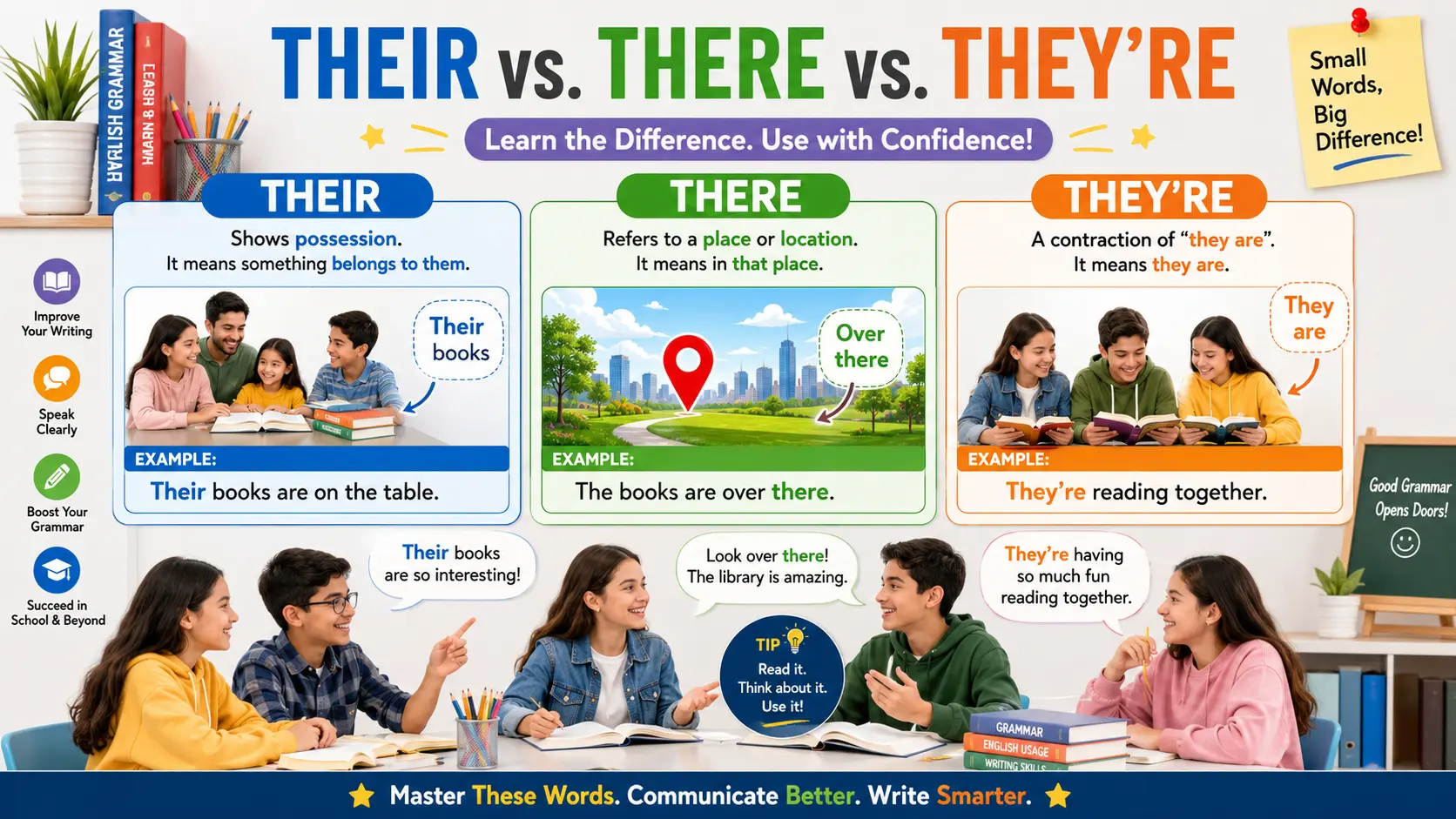
Their vs There vs They’re (Easy Guide + Examples)
Their vs There vs They’re: What’s the Difference? Let’s be honest: we have all been there. You are typing out a quick message or writing an important email, your fingers are flying across the keyboard, and suddenly you pause. Wait, is it t-h-e-i-r or t-h-e-r-e? You are definitely not alone. This trio is famous for…
-
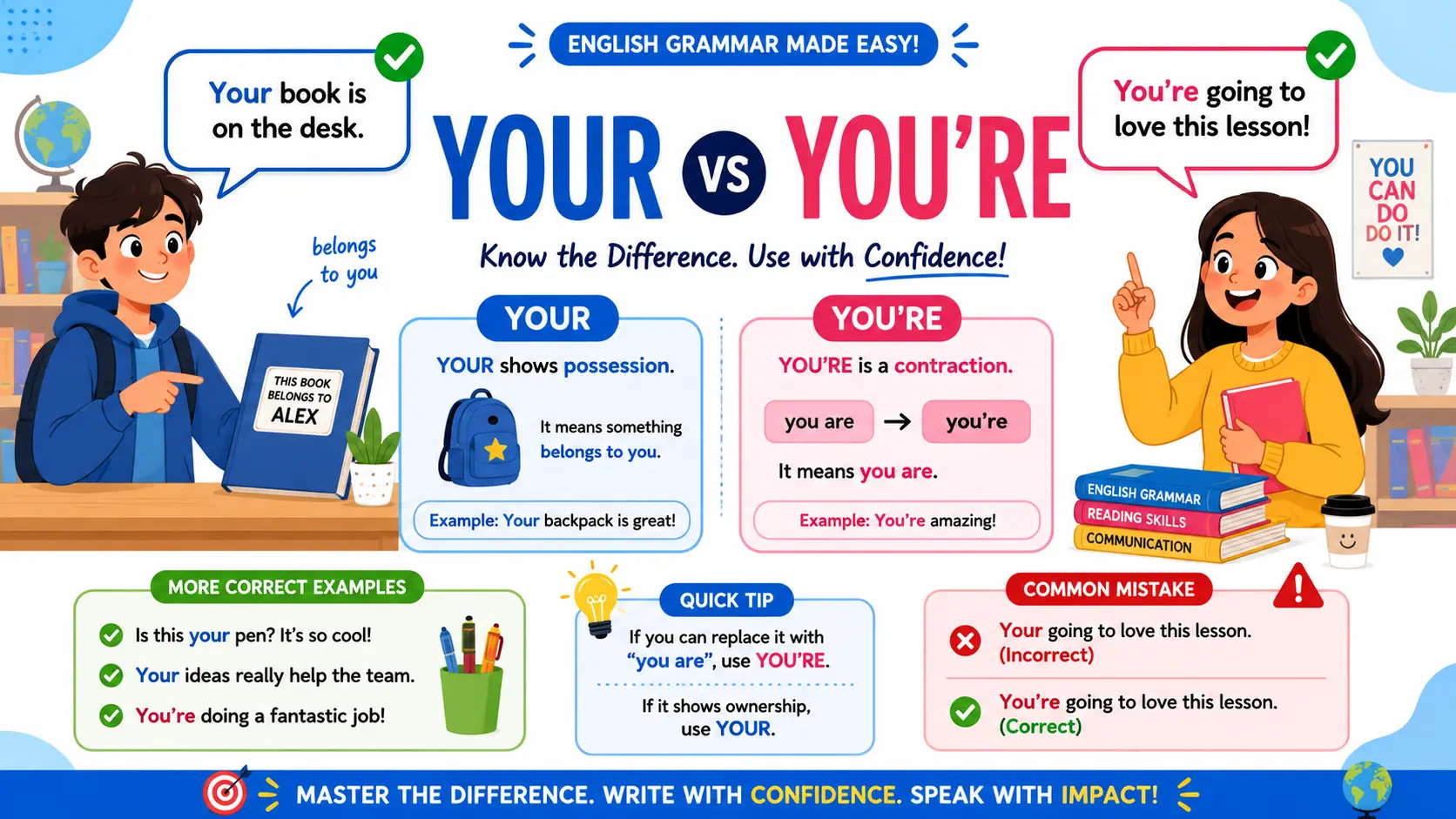
Your vs You’re: What’s the Difference?
🟢 Your vs You’re: What’s the Difference? Your vs you’re is one of the most common grammar mistakes in English. Many learners confuse these words because they sound the same when spoken. However, your and you’re have completely different meanings and uses. Understanding the difference between your vs you’re will help you write more clearly…